
Published 2026-05-12

Summary: The United States appears to have rejected or distanced itself from the UN Global Compact for Migration, with a State Department statement referencing concerns and why the U.S. did not sign the IMRF Progress Declaration on May 8. Coverage notes the pact is a 2018 voluntary, non-binding international agreement and highlights related remarks by Sen. Marco Rubio at a separate event criticizing European climate and migration policies.
What We Know
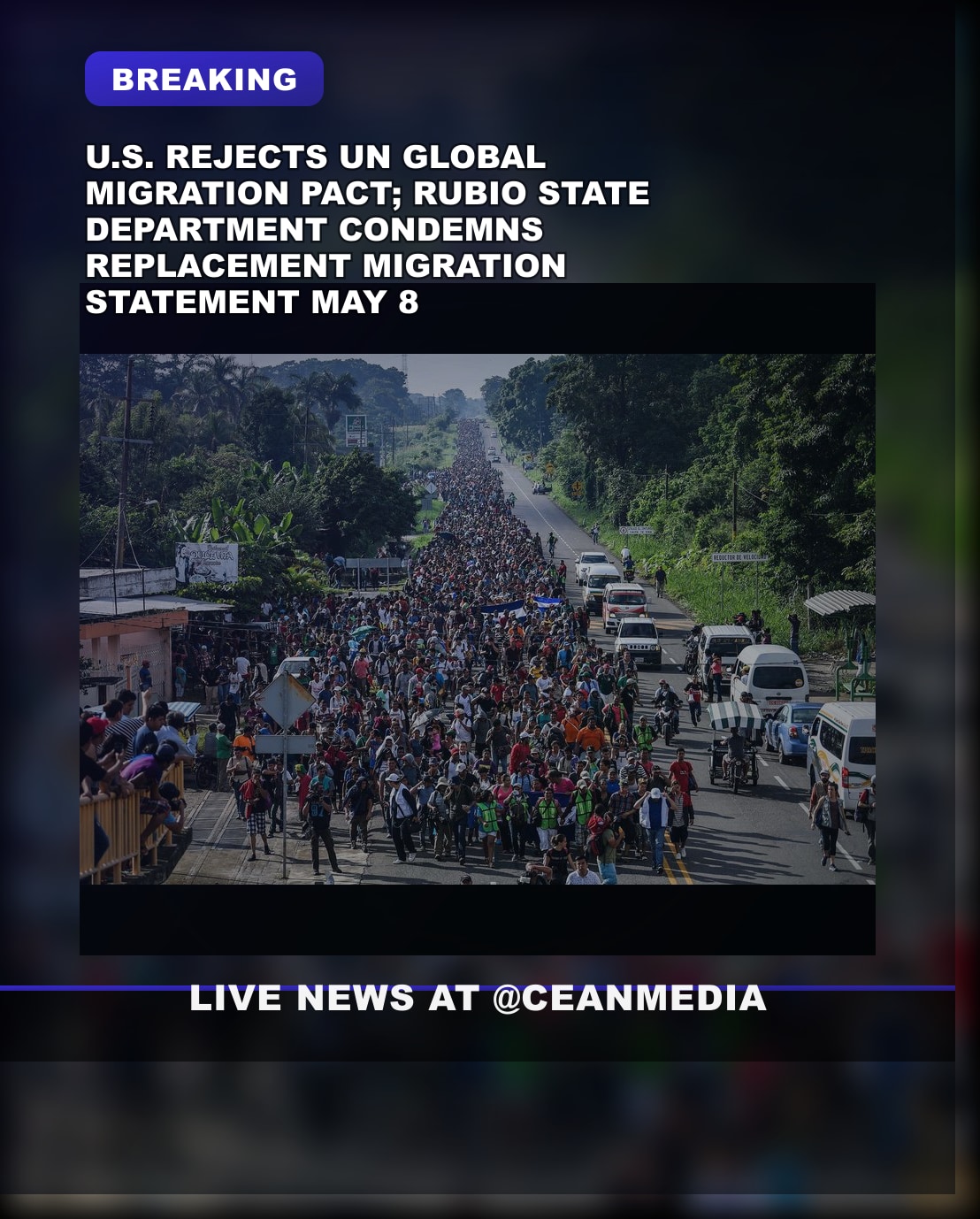
- The United States rejected or did not sign the UN International Migration Review Forum (IMRF) Progress Declaration on May 8, according to a State Department statement.
- The statement references “Replacement Migration” and condemns the Global Migration Pact as part of the U.S. position.
- UN News describes the Global Compact for Safe, Orderly and Regular Migration (GCM) as a 2018 international agreement that is voluntary and non-binding, with member states progressing toward its implementation.
- Rubio criticized European policies on climate and migration during a recent appearance at the Munich Security Conference, calling for transatlantic unity.
- The topic is framed within United States domestic politics/economy/society, including White House, Congress, states, and U.S. policy discussions around migration.
What’s Still Unclear
- Whether the U.S. formally rejected the Global Compact for Migration in an official policy document beyond the IMRF-related statement.
- The exact language or claims used in the State Department statement beyond references to “Replacement Migration.”
- Details on the U.S. rationale or policy objectives driving the decision, outside of the provided brief/context.
- Whether Rubio’s Munich remarks explicitly tied his commentary to U.S. policy rejection of the pact or were broader critique of European policy.
Context
The Global Compact for Safe, Orderly and Regular Migration is a 2018 intergovernmentally negotiated international framework designed to address various aspects of migration. It is generally described as voluntary and non-binding. Reactions to the pact, including from U.S. officials, have varied and intersect with broader debates over immigration policy, national sovereignty, and transatlantic cooperation.
Why It Matters
The U.S. stance on the Global Migration Pact influences international coordination on migration, affects the framing of migration policy in U.S. politics, and shapes transatlantic dialogue on climate, migration, and security issues.
What to Watch Next
- Officials’ public statements or policy documents clarifying the U.S. position on the GCM and IMRF declarations.
- Follow-up reporting on how this stance affects relations with UN bodies and partner countries.
- Additional remarks from Rubio or other U.S. lawmakers regarding migration and international coordination.
FAQ
Q: What is the Global Compact for Migration?
A: It is a 2018 international agreement that outlines all dimensions of international migration in a holistic, albeit voluntary and non-binding, framework.
Q: Did the U.S. sign or endorse the Global Migration Pact?
A: Based on available information, the U.S. reportedly did not sign the IMRF Progress Declaration, and a State Department statement references U.S. concerns and rejection; details on formal endorsement are not fully specified in the provided materials.
Related coverage
- Florida wildfire burning rapidly scorches acres as flames
- Florida wildfire emergency update: Firefighters push to
- Administration proposes rule to expand employers’ fertility
Source Transparency
- This article is based on a short preliminary brief and may not reflect the full details available in ongoing reporting.
- Source links are provided in the Sources section where available.
- A limited open-web check was used to clarify key details when possible; unclear items remain clearly marked.
Original brief: BREAKING:
The U.S. rejects the UN’s Global Migration Pact.
Rubio’s State Department has issued a statement condemning “Replacement Migration” and explaining why the U.S. didn’t sign the UN International Migration Review Forum (IMRF) Progress Declaration on May 8th.
A State…
Sources
- Countries make progress on migration pact, but more work remains – UN News
- Rubio slams European policies on climate, migration as he calls for …
- Global Compact for Migration – Wikipedia
- US Compliance with the Global Compact on Migration: A Mixed Record
- Rubio's Missed Opportunity on Migration in Latin America