
Published 2026-06-02

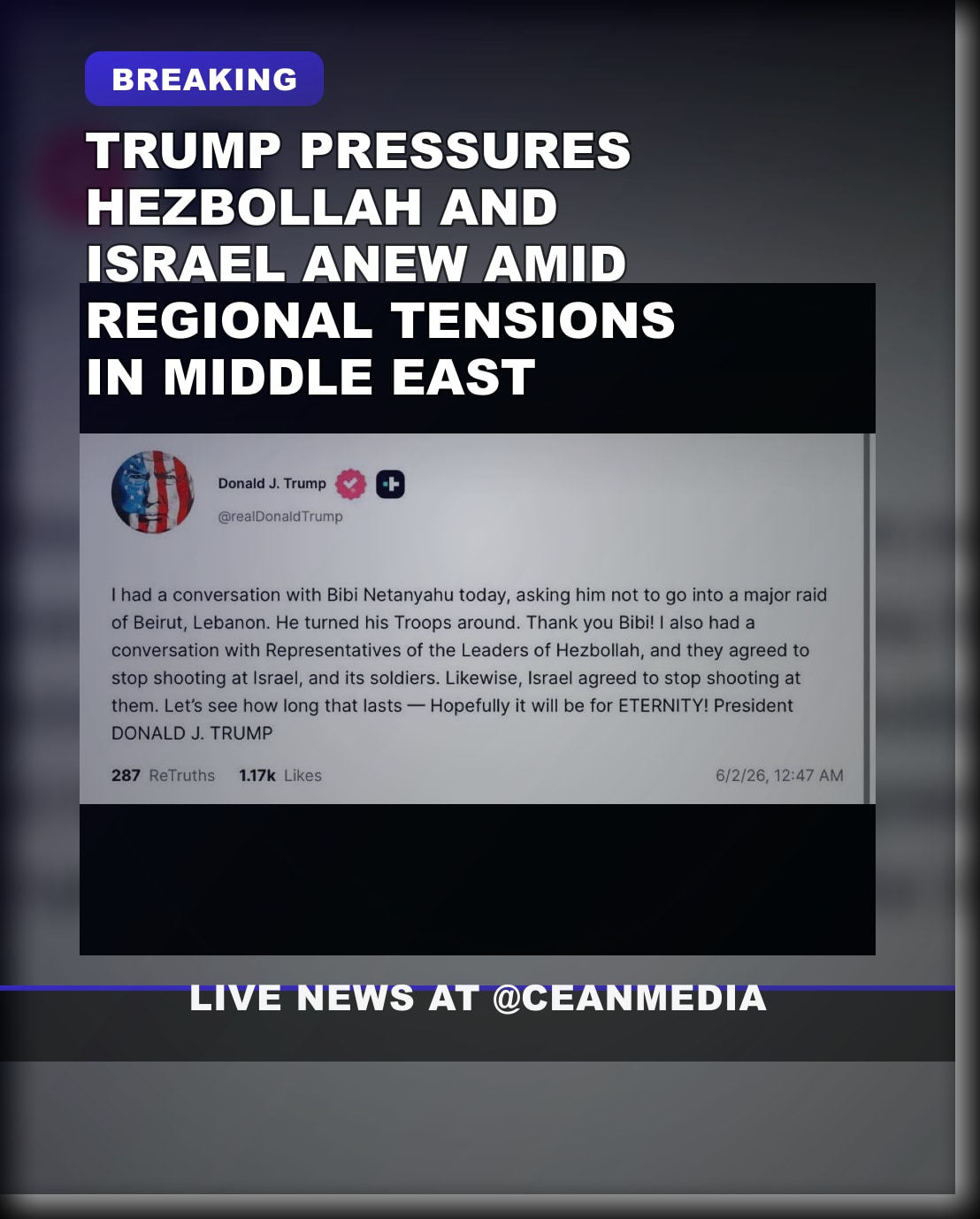
Summary: President Trump indicates through statements that he spoke with Israeli Prime Minister Netanyahu, indirectly engaged Hezbollah, and claimed de-escalation steps between Israel and Hezbollah, including a pullback of Israeli troops and a halt to new fighting.
What We Know
- Trump said he spoke with Israeli Prime Minister Netanyahu and, indirectly, with Hezbollah.
- Trump claimed Israel agreed to pull back troops that were preparing to attack southern Lebanon.
- Trump asserted that Israel and Hezbollah have agreed to dial back fighting and to stop shooting, indicating mutual de-escalation.
- Coverage appears consistent with reports that discussions involved intermediaries rather than direct contact with Hezbollah.
What’s Still Unclear
- Whether Hezbollah was contacted directly by Trump or solely through intermediaries, and how that contact was verified.
- Whether the agreements were formally confirmed by Israel, Hezbollah, or any mediating party.
- Specific terms, durability, enforcement mechanisms, and geographic scope of any de-escalation arrangement.
- Exact wording used by Trump and whether other actors acknowledged the statements publicly.
Context
In the broader Middle East security landscape, tensions between Israel and Hezbollah, supported by Iran and active in Lebanon, have periodically shown signs of de-escalation or escalation. Public statements suggesting de-escalation can influence regional calculations, but details and verifications are essential for assessing the actual impact on frontline risk and stability.
Why It Matters
Escalation control between Israel and Hezbollah has implications for regional stability, civilian safety, and the calculus of various state and non-state actors in the region. The credibility and sources of such de-escalation claims affect how governments and markets respond to risk and policy signals.
What to Watch Next
- Official confirmations or denials from Israel, Hezbollah, or mediators about any truces or troop movements.
- Follow-up statements or actions indicating whether de-escalation is sustained over time.
- Analysis from regional observers on whether the reported steps translate into on-the-ground changes.
- Any factual clarifications regarding who communicated with whom and through what channels.
FAQ
Q: What exactly did Trump claim about Hezbollah in relation to Israel?
A: He stated that he spoke with Netanyahu and indirectly with Hezbollah and claimed de-escalation steps, but the precise nature and verification of those claims remain unclear.
Q: Are these claims confirmed by official sources?
A: At this time, the available information does not show formal confirmations from the governments or Hezbollah; details are not fully corroborated in the provided materials.
Related coverage
- Brazilian fuel price containment extension extended by two
- Industrial metals gain ceasefire extension deal boosts
- Gold price gains ceasefire talks inflation relief
Source Transparency
- This article is based on a short preliminary brief and may not reflect the full details available in ongoing reporting.
- Source links are provided in the Sources section where available.
- A limited open-web check was used to clarify key details when possible; unclear items remain clearly marked.
Original brief: Trump sends writes about Hezbollah and z Israel again…
Sources
- Trump Says Israel and Hezbollah Will Hold Off on New Military Action
- Trump says he spoke to Lebanon's Hezbollah through intermediaries
- Once Again, Trump Halts Israeli Offensive Against Hezbollah, Reveals …
- Trump says Israel and Hezbollah have agreed to dial back fighting … – PBS
- Trump says Hezbollah and Israel have agreed to 'stop all shooting …