
Published 2026-06-19

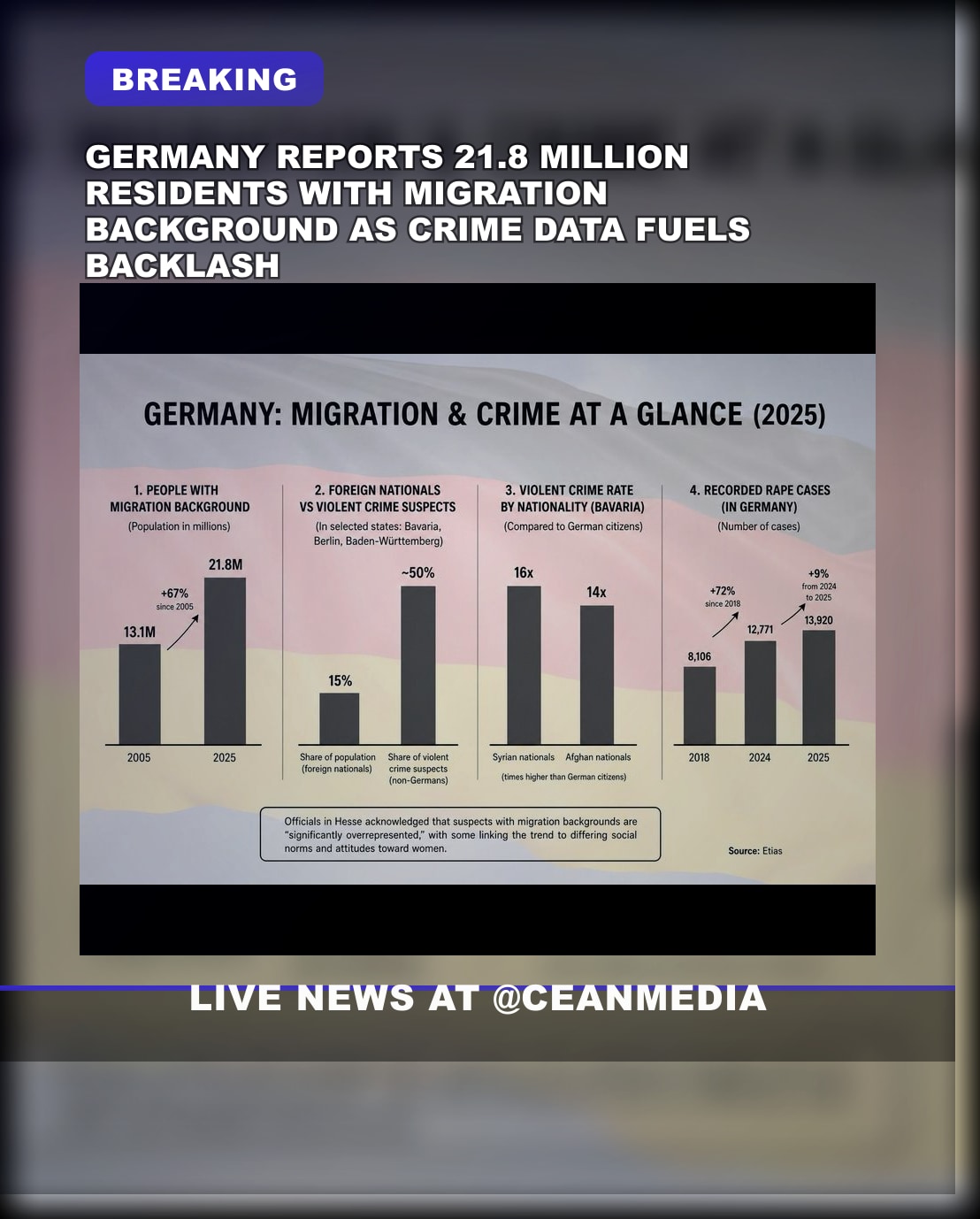
Summary: A new report indicates that 21.8 million people in Germany—roughly 26.3% of the population or about 1 in 4 residents—now have a migration background, a rise of 67% since 2005. The figures come amid political backlash linked to crime data involving foreign nationals.
What We Know
- In 2025, the number of people with a migration background in Germany is 21.8 million.
- This represents about 1 in 4 residents, or roughly 26.3%, having a migration background.
- The increase from 2005 to 2025 is reported as 67% (from 13 million to 21.8 million).
- The figure is associated with Destatis data, as cited by sources discussing the trend.
What’s Still Unclear
- Whether the 21.8 million figure is the absolute latest official Destatis count or a confirmed annual figure for 2025 is not explicitly confirmed in the provided excerpts.
- Details about the methodology behind defining “migration background” beyond standard statistical definitions are not specified here.
Context
Migration background is a standard demographic term used in Germany to describe people who themselves migrated to Germany or people born in Germany to at least one parent who migrated. The topic is closely tied to demographic trends, integration policies, and public debates on crime and social cohesion. Official statistics agencies periodically publish reports on the composition of Germany’s population and its migration-related dynamics.
Why It Matters
The reported rise in the share of residents with a migration background intersects with policy discussions on immigration, integration, and crime. Policymakers, researchers, and the public may weigh these statistics when considering social services, education, labor market participation, and public safety policies.
What to Watch Next
- Official Destatis releases or Bamf analyses confirming current figures and methodology.
- Subsequent reporting on political reactions and crime data related to migration background statistics.
- Comparative European data on migration and asylum patterns that provide broader context.
FAQ
Q: What does “migration background” mean in these statistics?
A: It refers to people who have moved to Germany themselves or who were born to at least one parent who migrated to Germany; exact definitions may follow standard statistical practice used by Destatis.
Q: Is 21.8 million a confirmed figure for 2025?
A: The available excerpts indicate 21.8 million for 2025 as reported by sources citing Destatis, but the precise official confirmation is not explicitly stated in the provided materials.
Related coverage
- Italian police arrest 21-year-old for promoting ISIS
- Qatar spending US influence: billions spent since 2010 in
- New Mexico Dog Recovers from New World Screwworm Infection
Source Transparency
- This article is based on a short preliminary brief and may not reflect the full details available in ongoing reporting.
- Source links are provided in the Sources section where available.
- A limited open-web check was used to clarify key details when possible; unclear items remain clearly marked.
Original brief: A new report says 21.8 million people in Germany, 26.3% of the population, or more than 1 in 4 residents, now have a migration background. That figure has surged 67% since 2005.
At the same time, police crime data is fueling major political backlash.
Foreign nationals make up…
Sources
- Germany: 1 in 4 residents has 'immigration history' – dw.com
- The Migration Reports – BAMF – Bundesamt für Migration und Flüchtlinge
- Germany: One in four residents has an immigration history
- One in four people in Germany has a migrant background
- Migration and integration – German Federal Statistical Office