
Published 2026-07-23

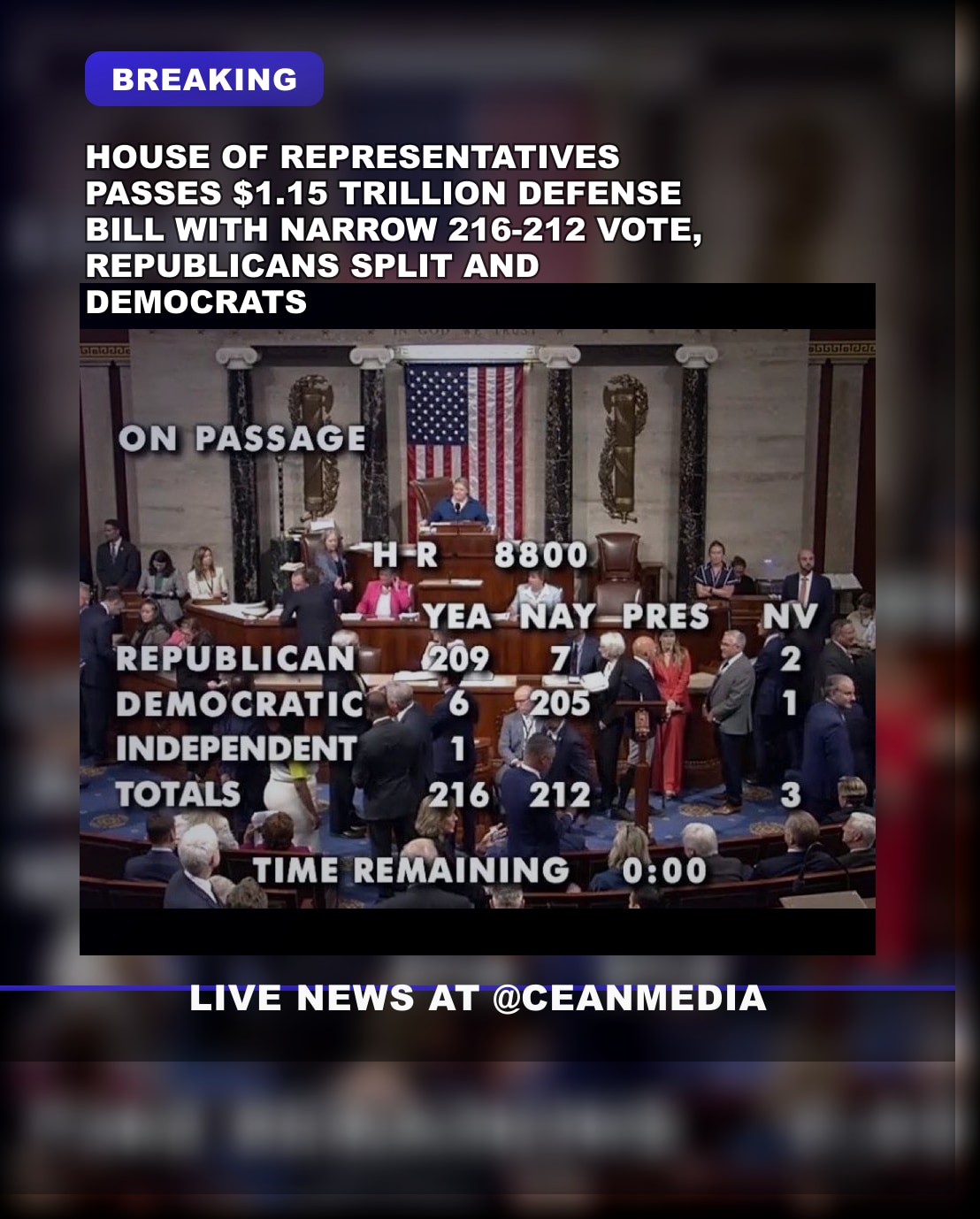
Summary: The House of Representatives passed the National Defense Authorization Act (NDAA) for fiscal year 2027 with a 216-212 vote. The outcome reflected a near party-line split, with three representatives sustaining from voting and a small number of party members breaking ranks.
What We Know
- The defense bill approved by the House is the National Defense Authorization Act (NDAA) for fiscal year 2027.
- The final vote tally was 216 in favor and 212 against.
- Reportedly, 7 Republicans voted against the bill and 6 Democrats voted to support it, indicating a bipartisan split in the final outcome.
- Three representatives sustained from voting on the measure.
- Coverage notes that the vote was near a party-line alignment in a closely watched legislative decision.
What’s Still Unclear
- The exact party-by-party breakdown of the 216-212 vote beyond the high-level counts (how many Republicans vs Democrats voted yes or no) is not specified in the provided materials.
- Details on the specific provisions or amendments included in this NDAA, and any changes from prior versions, are not confirmed in the available sources.
- Any implications for upcoming floor actions, conference negotiations, or potential veto considerations are not detailed here.
Context
The National Defense Authorization Act is a annual defense policy bill that outlines spending and policy directives for the Department of Defense. Passage in the House represents a key step in the annual budget and policy process, with the outcome often reflecting broader political dynamics and priorities among the major parties.
Why It Matters
Approvals of large defense budgets carry implications for national security planning, military readiness, and related policy initiatives. The near-partisan vote underscores ongoing partisan dynamics in Congress and may influence subsequent negotiation stages and related policy debates.
What to Watch Next
- Whether the NDAA advances to the Senate and the likelihood of a conference process to reconcile differences.
- Potential amendments or veto considerations if the bill’s provisions face significant opposition or support in subsequent rounds.
- Public and industry reactions to the policy directions embedded in the NDAA for fiscal year 2027.
FAQ
Q: What was the final vote on the defense bill in the House?
A: 216 votes in favor and 212 votes against.
Q: Were there party-line patterns or notable cross-party support?
A: Reports indicate a near party-line vote with a small number of Democrats supporting the bill and several Republicans voting against it; specifics beyond that are not detailed in the available sources.
Related coverage
- Activist investors cash payouts drive financial services
- Retiree healthcare cost pain: Fidelity warns costs hit
- Bank of America backs momentum stocks buy recommendation
Source Transparency
- This article is based on a short preliminary brief and may not reflect the full details available in ongoing reporting.
- Source links are provided in the Sources section where available.
- A limited open-web check was used to clarify key details when possible; unclear items remain clearly marked.
Original brief: The House of Representatives has passed the $1.15 trillion defense bill.
7 Republicans voted against, while 6 Democrats broke ranks to support it.
216 votes for and 212 votes against….
Sources
- House passes $1.15 trillion defense budget in near party-line vote
- House Republicans pass hard-right defense bill, handing wins … – POLITICO
- Congressional Votes Database – GovTrack.us
- House Passes $1.15T Defense Bill 216-212 – lowerbuckstimes.com
- House passes $1.15 trillion defense bill in near party-line vote