
Published 2026-08-09

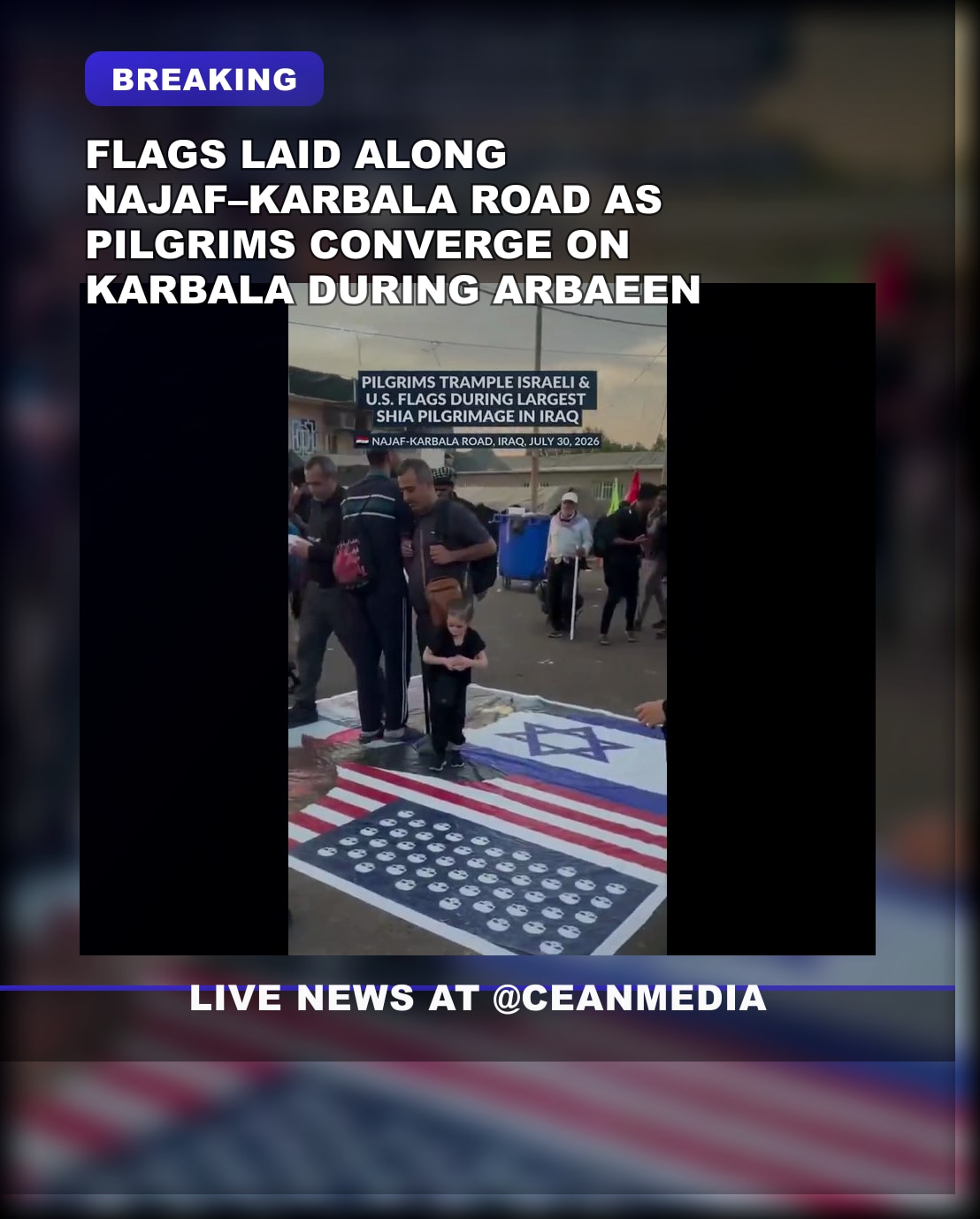
Summary: Reports indicate that during Arbaeen, flags attributed to Israel and the United States were laid along the Najaf–Karbala road in Iraq, a route used by millions of Shiite pilgrims heading to Karbala. Details about verification and exact placement are unclear in the available materials.
What We Know
- The Najaf–Karbala road is described as having landmarks or poles along the route, with numbers noted along the route in at least one source.
- The route from Najaf to Karbala is a well-known path for Arbaeen pilgrims, often described with pole-by-pole markers or landmarks on the way to Karbala.
- Public mentions in sources reference flags laid across the road during Arbaeen, including the involvement of Israeli and U.S. flags, though verification details are not provided.
- Contextual materials describe the road as a walkable corridor used by millions yearly, with a defined path and notable entry/exit points in Najaf and Karbala.
- There is at least one contemporary report tying Arbaeen activities to political statements or demonstrations of solidarity, such as support for Palestinians in Gaza, which may intersect with flag displays.
What’s Still Unclear
- Whether the Israel flag placement on the Najaf–Karbala road has been confirmed by independent or authoritative sources beyond brief reports.
- Exact date, location, or method of flag placement along the route, including whether flags were placed by organizers, participants, or other entities.
- Whether the flags were permanent fixtures, temporary displays, or symbolic gestures on a specific segment of the road.
- How widespread the flag displays were along the route (e.g., specific checkpoints vs. broader sections).
- Official responses or reactions from Iraqi authorities or religious authorities regarding the flag displays.
Context
The Najaf–Karbala corridor is a major pilgrimage route for Arbaeen, a large Shiite observance that draws millions of pilgrims to Karbala. The route is known for its long stretches marked by landmarks or poles and is described in guides as being walked along by participants each year. In recent years, political and regional tensions have frequently intersected with religious pilgrimages, including expressions of solidarity or protest related to Middle East conflicts.
Why It Matters
Flag displays on a major pilgrimage route touch on sensitive geopolitical and interfaith dynamics. Such visuals can be interpreted as political statements during a highly charged religious event, potentially influencing security considerations, crowd management, and international perception surrounding the Arbaeen pilgrimage and broader Middle East tensions.
What to Watch Next
- Independent verification of any flag displays along the Najaf–Karbala road from multiple sources.
- Official statements from Iraqi authorities or religious authorities regarding the incident.
- Any updates on how pilgrims and organizers respond to or interpret the flag displays.
- Further reporting on the political context of Arbaeen-related symbolism in the region.
FAQ
Q: Has an Israeli flag been officially confirmed on the Najaf–Karbala road?
A: Not confirmed in the available information; reports note the claim without verifiable details in the current sources.
Q: What is Arbaeen, and why is the Najaf–Karbala route significant?
A: Arbaeen is one of the world’s largest Muslim pilgrimages. The Najaf–Karbala route leads pilgrims to the holy city of Karbala, where the shrine of Imam Hussein is located.
Related coverage
- US weapons stockpiles concerns rise as defense hubs repel
- Trilateral Defense Pact Briefing: New Turkey-Saudi-Pakistan
- Turkish support for Palestinian cause: Fidan meets Hamas
Source Transparency
- This article is based on a short preliminary brief and may not reflect the full details available in ongoing reporting.
- Source links are provided in the Sources section where available.
- A limited open-web check was used to clarify key details when possible; unclear items remain clearly marked.
Original brief: During Arbaeen, one of the world’s largest Muslim pilgrimages, Israeli and U.S. flags were laid across the Najaf–Karbala road in Iraq, the route millions of Shiite pilgrims walk each year to the holy city of Karbala, where the shrine of Imam Hussein is located.
The U.S. flag…
Sources
- Flag's in The road between Najaf & Karbala 2020 – YouTube
- From Karbala to Gaza: During 'Arbaeen Walk' this year … – PressTV
- Najaf to Karbala — The Arba'een Walking Guide
- Najaf To Karbala Walk – Facebook
- Najaf to karbala mashi | Pakistan to Iran Iraq ziyarat by road travel …