
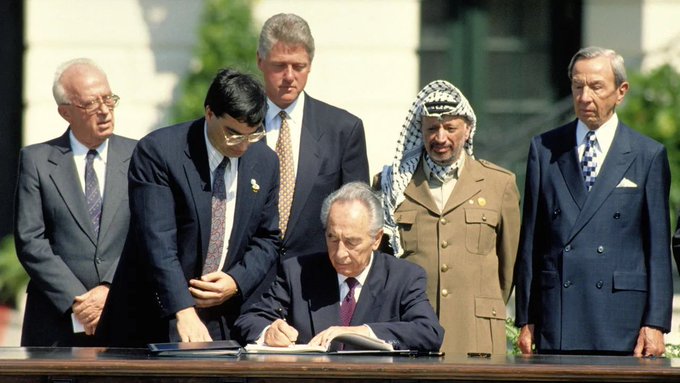
On September 13th, 1993, a historic milestone was achieved in the Israeli-Palestinian conflict as the Oslo Accords were signed in Washington D.C., marking the first formal agreement aimed at creating a framework for peace. The agreement was signed by Yasser Arafat, the head of the Palestine Liberation Organization (PLO), and Israeli Prime Minister Yitzhak Rabin, signifying a mutual step toward conflict resolution. The accords called for the PLO to renounce terrorism and recognize Israel, while Israel agreed to implement partial withdrawals from occupied territories.
The Oslo Accords established the Palestinian Authority (PA) as a governing body to administer parts of the West Bank and Gaza Strip, setting the stage for limited Palestinian self-governance. This development was seen as a significant step towards a two-state solution, although it also generated varied reactions from different factions and countries. The agreement aimed to pave the way for subsequent negotiations on final status issues such as refugees, borders, and Jerusalem.
Despite the optimism surrounding the signing, the Oslo process faced numerous challenges ahead, including continued violence and political disagreements. Nevertheless, the accords represented a rare moment of cooperation between Israeli and Palestinian leaders and underscored an international commitment to peaceful resolution. The signing ceremony marked a crucial turning point in Middle Eastern diplomacy, fostering hope for a future in which Israelis and Palestinians could coexist peacefully.
As the years progressed, the implementation of the Oslo Accords remained complex, with breakthroughs and setbacks alike. Yet, the 1993 agreement remains a landmark in the quest for peace, symbolizing both the possibilities and difficulties inherent in resolving one of the most long-standing conflicts in modern history.