
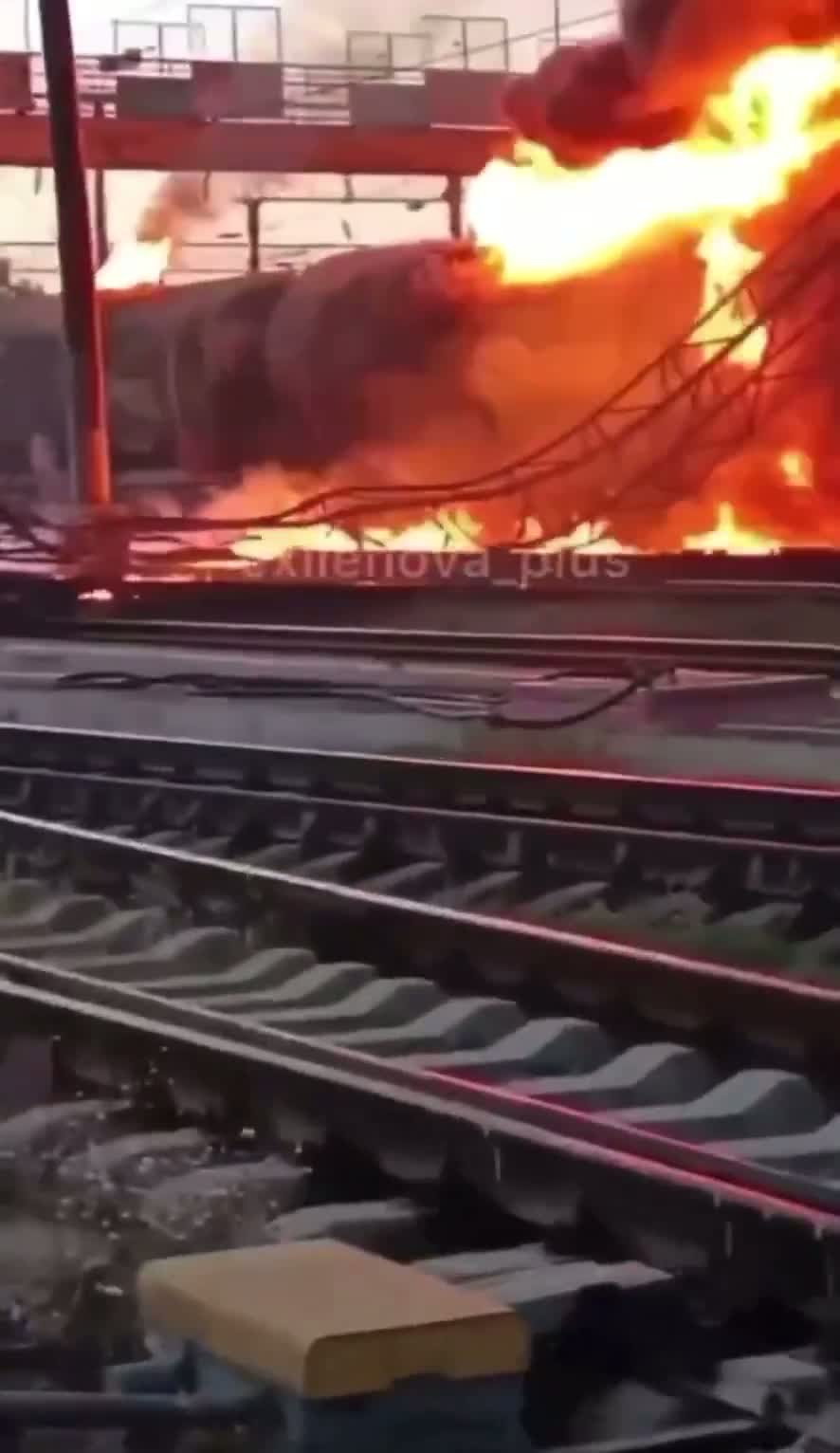
A Ukrainian suicide drone attack struck a Russian train transporting fuel through the Rostov region, close to the Ukrainian border, on Tuesday. The incident damaged the train and disrupted logistical operations vital for Russian military supplies heading toward the frontlines in Ukraine. No casualties have been officially reported, but the attack underscores Ukraine’s ongoing efforts to target Russia’s military logistics infrastructure.
The incident marks another escalation in Ukraine’s covert and overt efforts to weaken Russian military capabilities. Ukrainian officials have previously confirmed the use of unmanned aerial vehicles (UAVs) in strikes against Russian supply routes, aiming to hinder Moscow’s ability to reinforce and resupply its forces in Ukraine. Russia, meanwhile, has condemned the attack as a provocative act, accusing Kyiv of escalation.
Russian authorities have launched investigations into the attack and heightened security measures in border regions. The Rostov incident comes amid ongoing reports of Ukrainian strikes targeting key logistics hubs and infrastructure in Russia, reflecting Kyiv’s strategy to stretch Moscow’s logistical reach and hold the frontlines at bay. The ongoing battles continue to demonstrate the shifting nature of the conflict, with Ukraine actively disrupting Russian military routes.
The attack’s timing raises questions about escalation and the broader trajectory of the conflict, as both sides expand their use of advanced tactics. Experts suggest that Ukraine’s focus on targeting supply lines could ultimately impact Russia’s military momentum in the coming weeks. The international community has called for de-escalation, but the persistent strikes indicate the hardening of positions on both sides.