
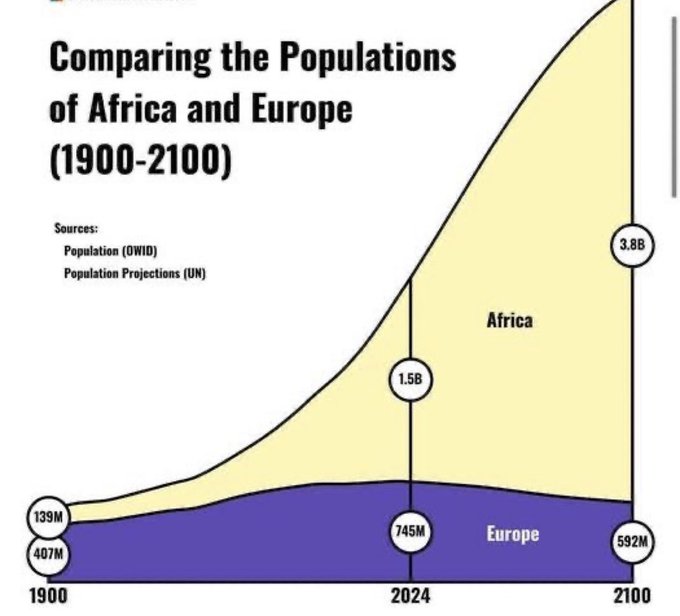
Global population dynamics over the 20th and early 21st centuries reveal significant shifts, particularly between Africa and Europe. In 1900, Europe’s population was substantially larger, with approximately 407 million inhabitants, compared to Africa’s population of 139 million. Over the course of the 20th century, these figures changed dramatically.
By 2100, projections suggest that Africa’s population will have grown substantially to approximately 3.88 billion, reflecting ongoing demographic trends. In contrast, Europe’s population is expected to increase modestly to around 592 million, indicating relatively stable or even declining growth rates in many European countries. These demographic shifts are expected to influence global economic, political, and social landscapes in the coming decades.
The rapid population growth in Africa is often attributed to higher birth rates and improving healthcare, leading to increased life expectancy. Meanwhile, Europe’s population growth remains comparatively slow, with some countries experiencing aging populations and declining birth rates. Policymakers and planners worldwide are observing these trends to adapt strategies related to healthcare, economic development, and migration.