
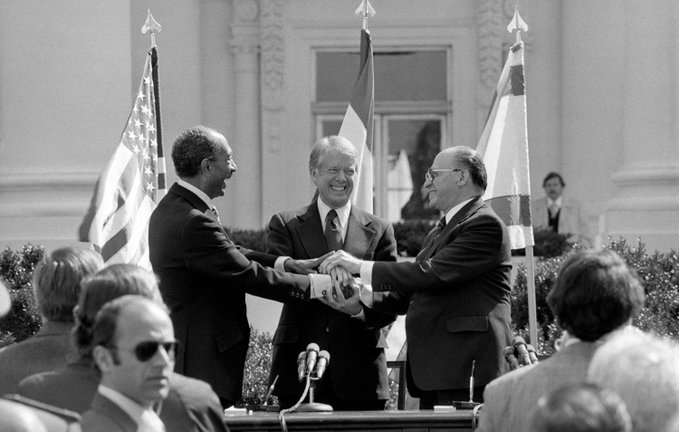
The Egypt-Israel Peace Treaty, signed in 1979, marked a significant milestone in Middle Eastern diplomacy. It was the first peace agreement between Israel and an Arab country, establishing formal diplomatic relations and ending decades of conflict following the 1948 Arab-Israeli war.
A key component of the treaty involved Egypt recognizing Israel’s sovereignty, which was a major breakthrough. In return, Israel withdrew its military presence from the Sinai Peninsula, territory it had occupied since the Six-Day War in 1967. This withdrawal signaled a willingness to make territorial concessions in pursuit of peace.
The agreement was met with both praise and criticism within the region. It demonstrated that comprehensive peace treaties could lead to tangible territorial changes and improved diplomatic ties. Over the years, the treaty has served as a foundation for ongoing negotiations and stability efforts in the region.
Despite initial opposition from some Arab nations and groups, the Egypt-Israel Peace Treaty has persisted, reflecting a significant step toward diplomacy and coexistence in a historically volatile region.