
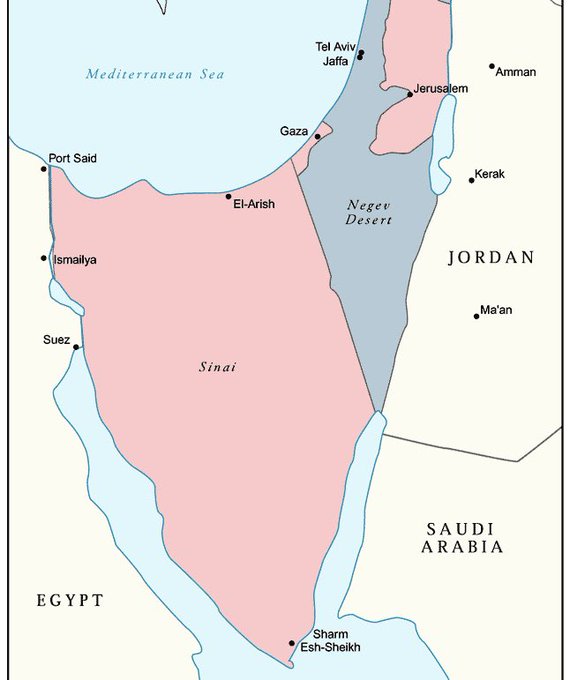
The Sinai Peninsula, a region of strategic and geopolitical significance, was captured by Israel from Egypt during the 1967 Six-Day War. For over a decade, Sinai remained under Israeli control, becoming a focal point of regional tension. However, this changed following the signing of the peace treaty between Israel and Egypt in 1979, when Israel formally withdrew from Sinai and returned the territory to Egyptian sovereignty.
This transfer marked a significant shift in the region’s geopolitical landscape, distinguishing Sinai from other Palestinian territories such as Gaza and the West Bank. Unlike Gaza and the West Bank, which remain disputed territories with ongoing conflicts, Sinai was fully returned to Egypt as part of the peace agreement, resulting in a different administrative and security landscape.
The return of Sinai has allowed for a degree of stability in the region, although the area has faced ongoing challenges, including security concerns related to militant groups. The regional dynamics continue to evolve, with Sinai serving as a key example of territorial change following peace negotiations. The status of Sinai remains a notable element of the broader Israeli-Arab conflict and peace process.