
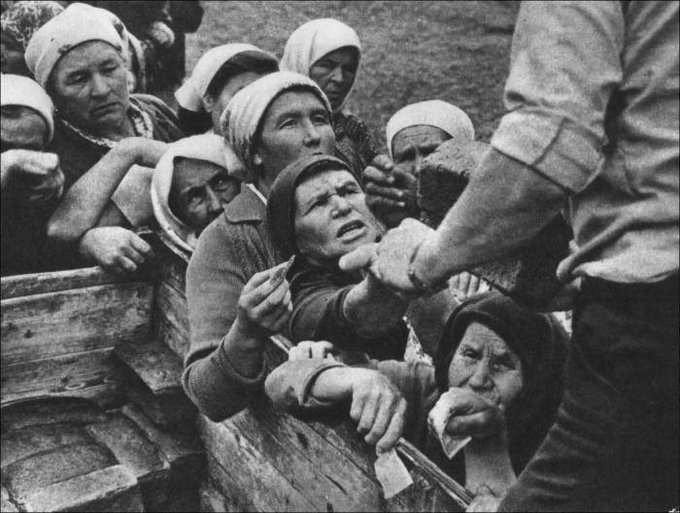
In 1961, the Soviet Union showcased a stark juxtaposition between its propaganda and the realities faced by its citizens. While citizens waited in long lines for bread due to shortages, government officials celebrated the achievements of the Soviet space program, notably Yuri Gagarin’s historic flight into space. The image of national pride was contrasted with the widespread struggles to secure basic food needs.
Despite the propaganda glorifying its technological and scientific advancements, the Soviet Union’s domestic issues persisted. The food distribution system was strained, leading to shortages and widespread dissatisfaction among the population. Bread queues became a common sight, reflecting underlying economic and logistical challenges within the country.
By 1963, these problems had intensified, and the Soviet Union was facing a significant food crisis. The shortages impacted millions, highlighting the gap between the state’s aspirations for technological progress and the practical economic difficulties encountered by ordinary citizens. The period underscored the contrasting realities of progress and hardship in the USSR during the early 1960s.