
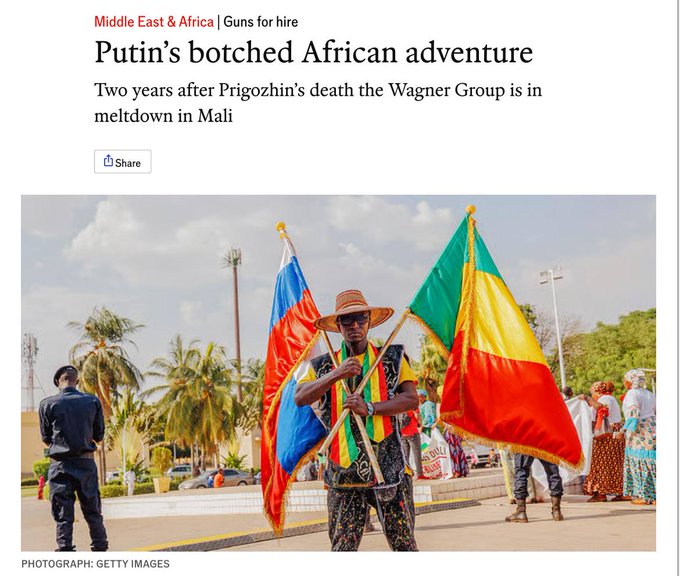
The Wagner Group, a Russian private military company, has faced significant setbacks in Africa, particularly in Mali, where its operations have come under scrutiny. According to a report by The Economist, the mercenary group has largely failed to achieve its security objectives in the region over the past two years. This decline follows the death of Yevgeny Prigozhin, the founder of Wagner, which analysts believe may have impacted the organization’s operational effectiveness.
In Mali, Wagner’s presence was initially aimed at supporting the government amid escalating insurgencies. However, the group’s efforts have been criticized for failing to stabilize the security situation. Instead, reports indicate that the Wagner forces contributed to increased chaos, with frequent clashes and violence reportedly intensifying in areas where they operate. Critics argue that the group’s involvement may have exacerbated existing conflicts rather than mitigating them.
The decline of Wagner’s influence in Mali appears to reflect broader challenges faced by Russian private military contractors in Africa. Despite initial ambitions of establishing a lasting presence, logistical issues, internal disagreements, and shifting regional dynamics have hampered their efforts. As the Wagner Group’s role diminishes, the security landscape in Mali and surrounding regions remains uncertain, with ongoing instability posing concerns for local and international stakeholders.
The future of Wagner’s operations in Africa remains uncertain, with some analysts suggesting that other actors may seek to fill the power vacuum left by the group’s decline. The situation underscores the complex and often unpredictable nature of private military involvement in fragile regions, highlighting the need for comprehensive solutions to regional security challenges.