
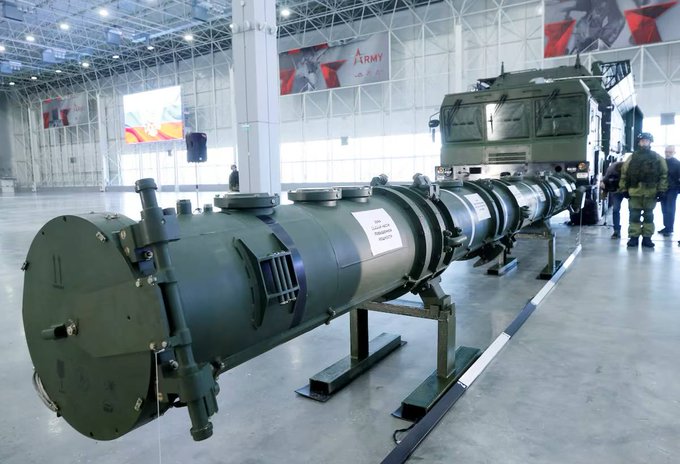
Russia reportedly employed a 9M729 missile, believed to be capable of carrying a nuclear warhead, in an attack against Ukraine, according to Ukrainian Foreign Minister Andriy Sybiha. The details of the incident have not been independently verified, but the claim highlights ongoing concerns about the use of advanced missile technology in the conflict.
The 9M729 missile’s development has been a subject of international scrutiny due to its capabilities. It is considered to be an advanced missile with the potential for nuclear payload delivery. In 2019, the United States withdrew from the Intermediate-Range Nuclear Forces (INF) Treaty, citing Russia’s development and deployment of such missile systems as a primary reason. The treaty, which aimed to limit intermediate-range missile arsenals, was seen as a cornerstone of arms control efforts but faced challenges related to compliance and verification.
The incident underscores the ongoing tensions surrounding missile development and deployment in the context of Ukraine. Western officials have expressed concern about the increased use of advanced missile systems in the region, which could have broader implications for international security. Russia has not officially confirmed or denied the use of the 9M729 missile in this specific instance, and the full details remain under investigation.
As the situation develops, the international community continues to monitor the conflict closely, with experts emphasizing the importance of diplomatic efforts to prevent escalation. The use of missile systems capable of nuclear payloads remains a sensitive issue, reflecting the complex and volatile security environment in Eastern Europe.