
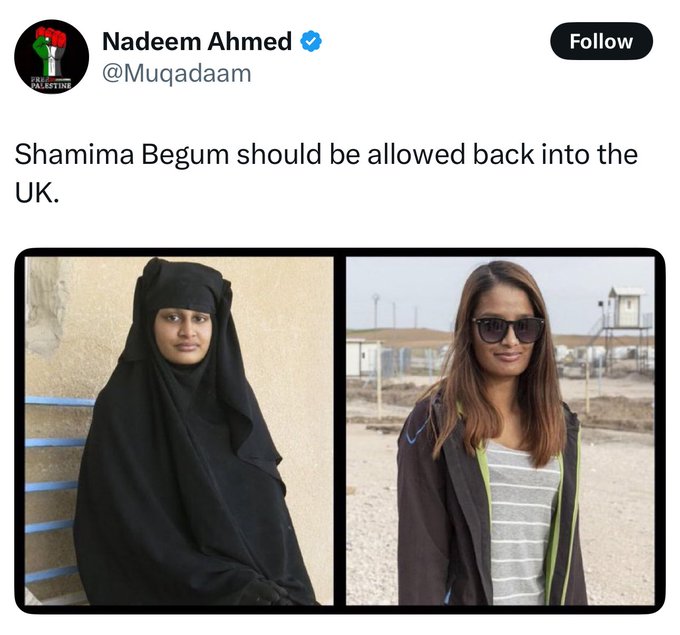
Shamima Begum, a British woman who left the UK as a teenager, traveled willingly to Syria and joined the Islamic State (ISIS). Her decision to join the extremist group occurred in 2015, during a period of heightened chaos in the region. Begum has remained a controversial figure since her departure from the UK, with her case attracting significant media attention.
While in Syria, Begum reportedly became involved in enforcing the group’s strict interpretation of morality as a member of ISIS’s “morality police.” She was granted the authority to carry a Kalashnikov rifle and attempted to recruit other young women to join the jihadist organization. Her activities within the group highlighted her active participation in the operational aspects of ISIS, beyond mere ideological support.
Begum’s return to the UK remains a subject of debate and legal scrutiny, with questions raised about her potential threat and the extent of her involvement in ISIS activities. Authorities have examined her case in the context of national security and counter-terrorism efforts, while her supporters argue for rehabilitation and reintegration.
Her story continues to raise questions about the factors that lead individuals to join extremist groups and the challenges faced by governments in addressing fighters who have returned from conflict zones. The broader implications of her case are part of ongoing discussions on counter-extremism policies in the UK and internationally.