
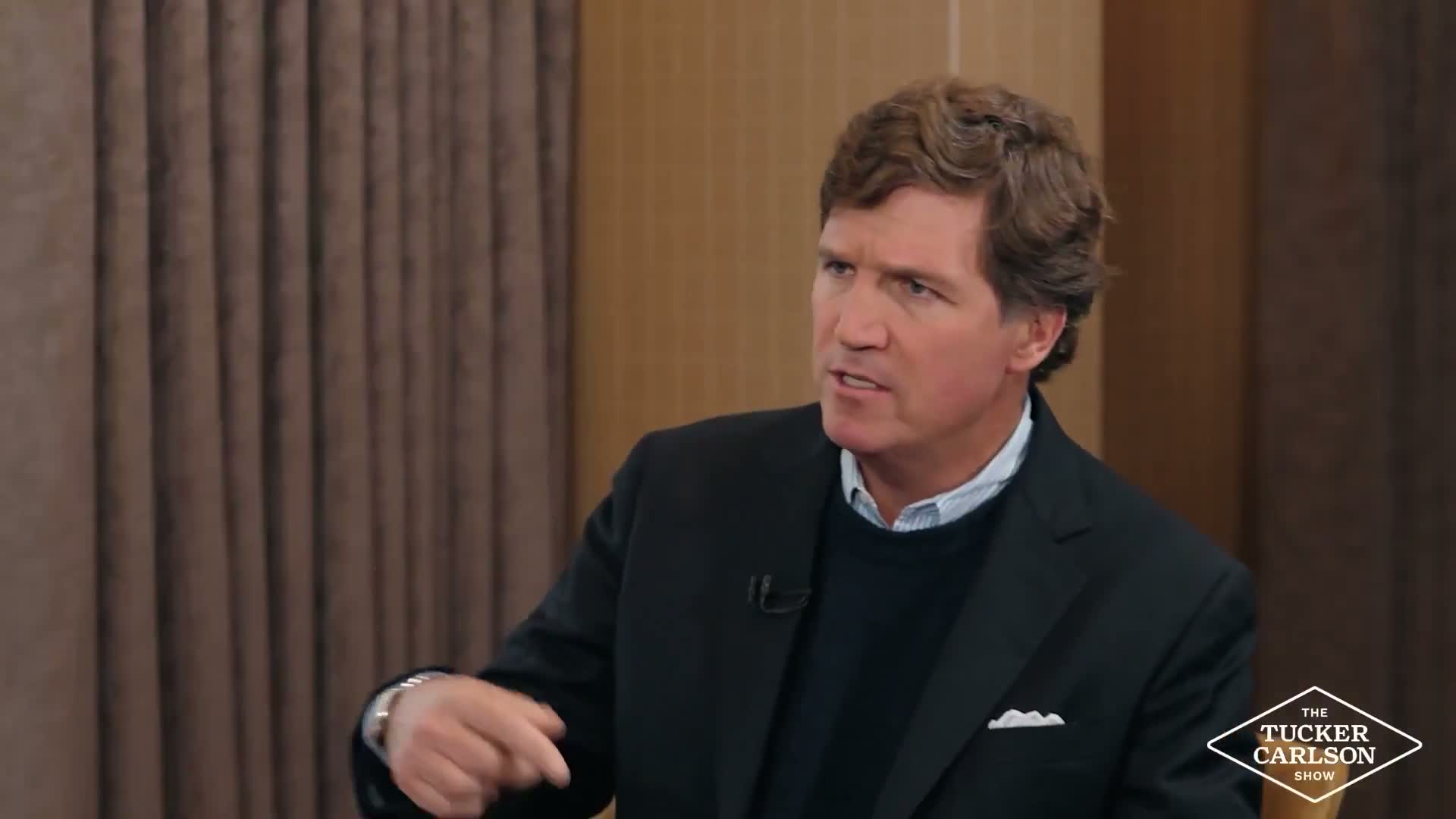
During a recent statement, Tucker Carlson asserted that Adolf Hitler’s primary focus was on combating Communism. However, this claim has been met with skepticism by historians, given Hitler’s strategic actions in the lead-up to World War II. Critics point out that Hitler’s policies and military actions often defied the notion that his main goal was an ideological battle against Communism.
One key example challenging Carlson’s assertion is Hitler’s signing of the Molotov-Ribbentrop Pact in 1939, a non-aggression treaty with the Soviet Union, then the world’s only Communist country. The pact included a secret protocol to divide Eastern Europe, which facilitated Hitler’s invasion of Poland later that year. This military move directly contradicted the idea that Hitler was primarily opposed to Communism, as he temporarily aligned with the Soviet Union for territorial gain.
Furthermore, Hitler’s dismemberment of Czechoslovakia in 1938 and 1939 further demonstrated his expansionist ambitions beyond a purely ideological conflict. While anti-Communism might have played some role in his worldview, these actions suggest that territorial conquest and national interests were significant motives. Historians emphasize that Hitler’s aggressive foreign policy aimed at reshaping Europe’s borders, often aligning with opportunistic diplomatic agreements rather than ideological battles alone.
Ultimately, the evidence indicates that Hitler’s motives were complex, encompassing both ideological opposition to Communism and strategic imperialism. Assertions that he solely focused on fighting Communism are widely regarded as an oversimplification of the historical record.