
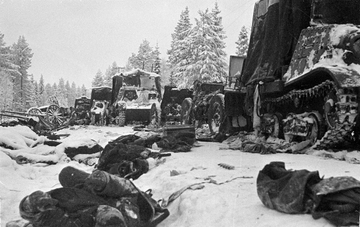
On the anniversary of the onset of the Winter War in 1939, Kremlin officials have issued statements commemorating what they describe as the “victory of the USSR over Finland.” The events are being presented in official narratives as a significant military achievement, aligning with broader historical anniversaries celebrated within Russia.
However, a closer examination of the conflict suggests a more complex reality. The Soviet Union’s attempt to conquer Finland, a nation with a population of less than four million, resulted in limited territorial gains and significant military challenges. The Winter War, which lasted from November 1939 to March 1940, ended with the Moscow Peace Treaty, whereby Finland ceded some territory but maintained its independence.
Analysts note that despite the Soviet Union’s substantial military and population advantages — with around 170 million inhabitants — the campaign did not produce a decisive victory for Moscow. Finland’s resilient defense, characterized by effective use of terrain and unconventional tactics, inflicted considerable losses on the Soviet forces and gained international sympathy.
The anniversary highlights differing narratives: while official Russian discourse emphasizes the Soviet push as a victory, historical assessments acknowledge the limitations of the campaign and the resilience of Finland. The contrasting viewpoints underscore ongoing debates over historical memory and national narratives surrounding this pivotal moment in history.