
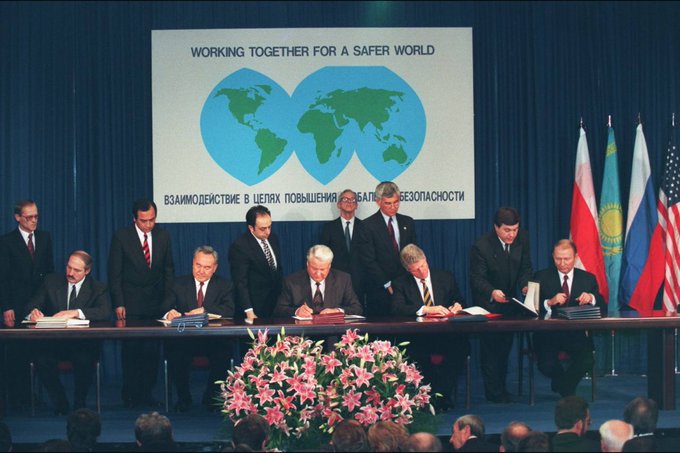
On December 5, 1994, Ukraine formally signed the Budapest Memorandum, a diplomatic agreement in which it relinquished its nuclear arsenal, then the third-largest in the world. In exchange, the United States, the United Kingdom, and Russia provided security assurances to respect Ukraine’s independence and sovereignty, aiming to promote stability in the region following the end of the Cold War. The decision marked a significant step in nuclear disarmament and international diplomacy, with Ukraine voluntarily giving up a capabilities that had been inherited from the Soviet Union.
Two decades later, in 2014, these security guarantees appeared to be tested when Russia annexed Crimea and supported separatist movements in eastern Ukraine. Kyiv and Western nations criticized Russia’s actions as a breach of the Budapest Memorandum, which did not include legally binding security commitments but rather political assurances. The events of 2014 prompted widespread debate over the effectiveness of non-binding security assurances and questioned the long-term security framework established by the agreement.
The Budapest Memorandum remains a landmark in nuclear disarmament history, illustrating both the potential and limitations of diplomatic security guarantees. As Ukraine continues to navigate its security challenges, discussions about the role and reliability of such guarantees continue to influence international diplomacy and non-proliferation efforts. The anniversary underscores the complex balance between disarmament commitments and the realities of geopolitical security.