
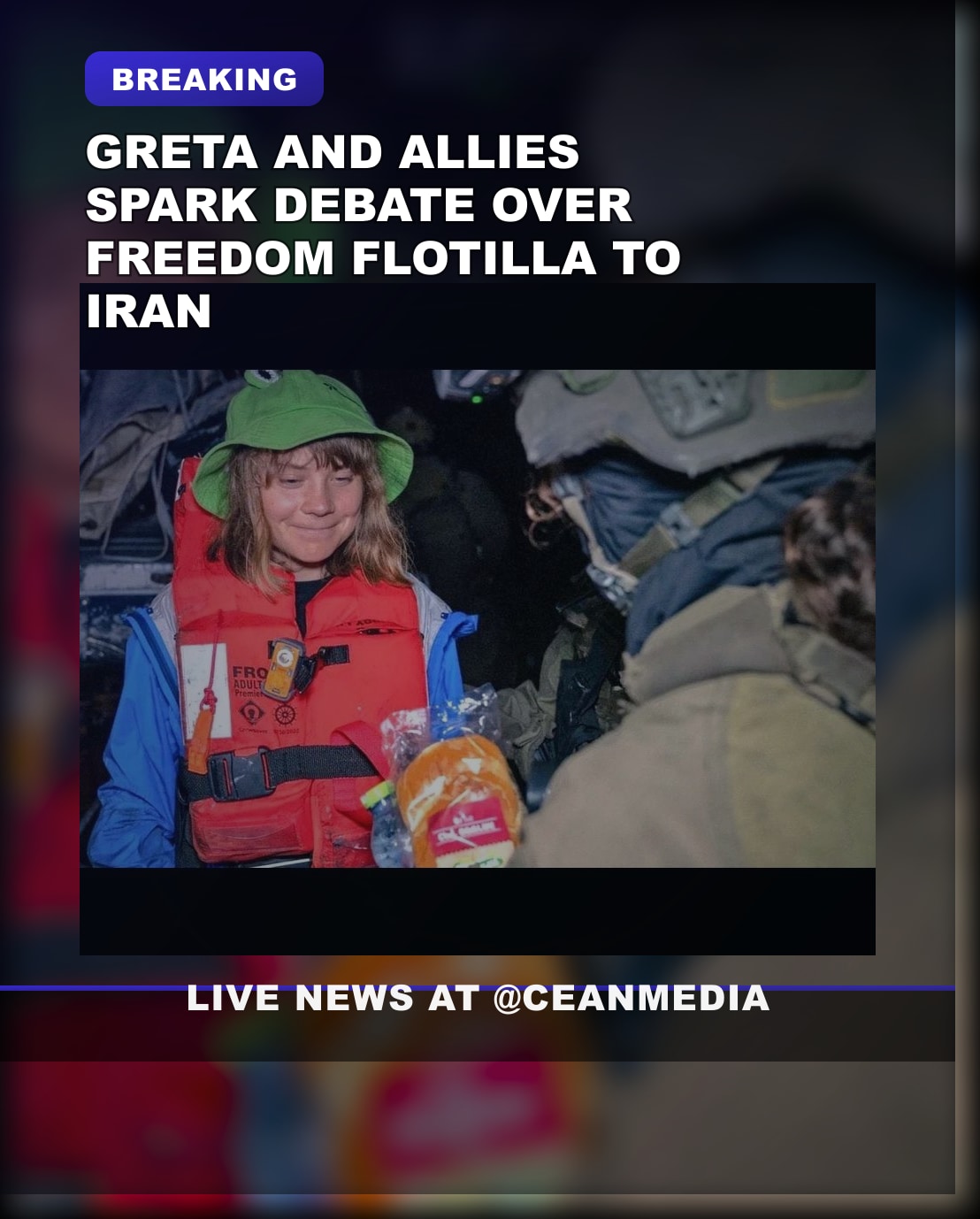
Recently, discussions have emerged online questioning why prominent activists like Greta Thunberg and her allies have not organized a “Freedom Flotilla” to Iran. Such initiatives are often associated with protests or movements aimed at supporting political change or advocating for human rights. The idea of a maritime convoy has been floated as a symbolic gesture to draw international attention to issues within Iran, particularly concerning the country’s political climate and human rights record.
However, experts and observers point out several reasons why such a campaign has not materialized. Organizing a flotilla of this nature involves significant logistical challenges and legal considerations, including securing international permissions and ensuring safety amidst geopolitical tensions. Additionally, some suggest that activists prefer to focus on diplomatic and non-violent forms of advocacy, such as global awareness campaigns or working through political channels, rather than direct confrontational actions like a flotilla.
Furthermore, representatives of Greta Thunberg and similar groups have emphasized their commitment to peaceful activism that aligns with international law. They often advocate for systemic change through policy advocacy, climate action, and raising awareness via protests and social media. There has been no indication from these groups that they plan to undertake maritime protests to Iran at this time.
While the idea of a “Freedom Flotilla” garnering attention reflects ongoing global interest in Iran’s political situation, current strategies for activism tend to favor non-confrontational, internationally coordinated efforts. As circumstances evolve, it remains possible that activists might consider different forms of protest, but for now, no such flotilla initiative has been publicly announced by Greta Thunberg or her peers.