
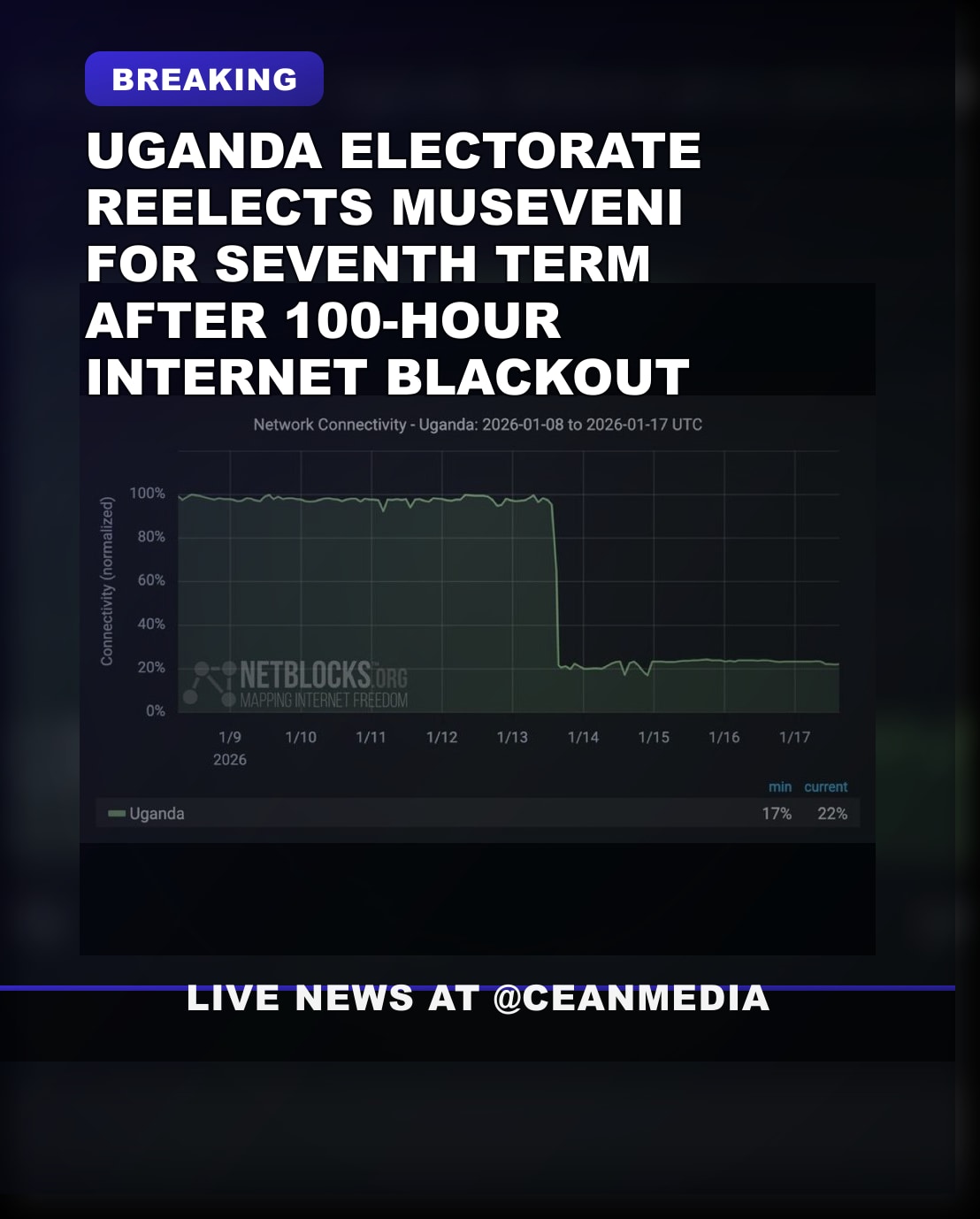
The internet blackout in Uganda has now extended beyond 100 hours, significantly impacting communication and information flow within the country. Authorities have not provided official details regarding the reasons for the prolonged outage, which has raised concerns among citizens, opposition groups, and international observers about the transparency and fairness of the electoral process.
Earlier today, Uganda’s electoral commission announced the results of the recent presidential election, declaring the incumbent president, Yoweri Museveni, who is 81 years old, as the winner. Museveni has secured his seventh term in office, having been in power since 1986. The election has been closely watched both domestically and internationally, with some critics questioning the electoral process and the restrictions on dissent.
Following the announcement, there has been limited public commentary amid the ongoing internet blackout, which has hindered independent reporting and the dissemination of election-related information. Meanwhile, supporters of Museveni have celebrated his victory, while opposition figures have expressed concerns over the electoral process and what they describe as suppression of dissent.
As Uganda remains under the influence of this extended digital disruption, the international community continues to monitor the situation. The prolonged blackout and the election results highlight ongoing tensions surrounding Uganda’s governance and political landscape. Further developments are expected as authorities and civil society groups respond to the post-election period.