
Published 2026-03-17

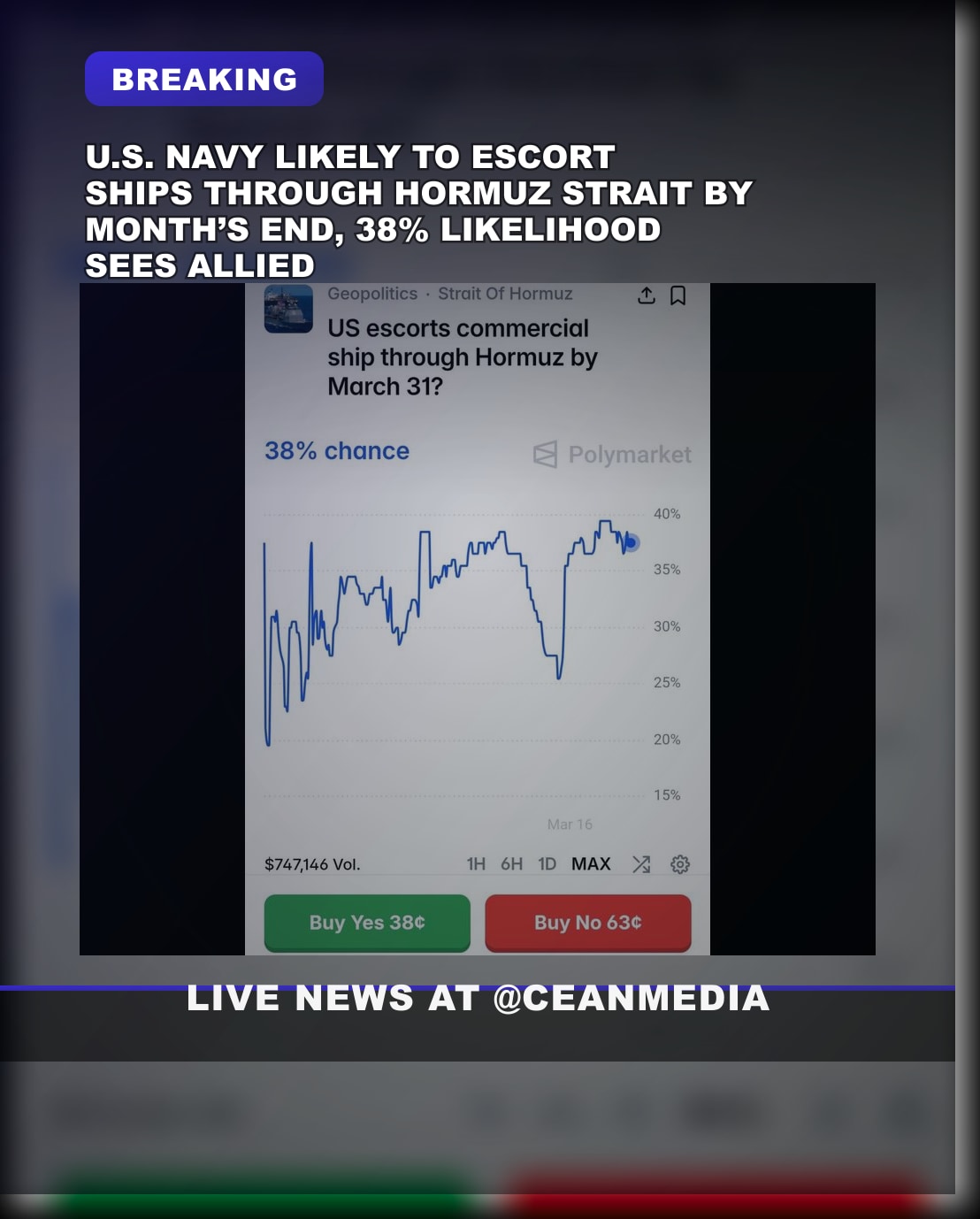
Summary: A discussion around whether the U.S. Navy would begin escorting commercial ships through the Strait of Hormuz has surfaced, with reports citing a 38% odds tied to a market assessment. Public remarks suggest allied navies might assist in reopening the strait, though no official confirmation is provided in the available materials.
What We Know
- There have been discussions or statements about U.S. Navy escorting commercial oil tankers through the Strait of Hormuz if needed.
- The topic has been linked to attempts to address an oil supply disruption and strategic access through the Strait.
- Public coverage notes that the Strait of Hormuz has a history of naval operations and escorted movements during tanker wars in the late 1980s.
- There are references to potential allied naval support for such an operation, as suggested by some statements attributed to political leaders.
- Some reports mention that the U.S. Navy has previously refused near-daily requests for escorts due to perceived risk, highlighting ongoing risk considerations.
What’s Still Unclear
- Whether any official decision to begin escorting ships has been made or scheduled.
- Specific timelines, operational plans, or which vessels would participate.
- The current status of any market-based probability like the 38% figure and its methodological basis.
- Which allied navies might participate and under what terms.
- Exact risks, rules of engagement, or escalation protocols for such operations.
Context
General background: The Strait of Hormuz is a strategic chokepoint with a history of naval activity related to tanker movements and regional security dynamics. In times of heightened tension, discussions about escorting commercial traffic through the strait have periodically surfaced, drawing attention to logistics, security risks, and international cooperation considerations.
Why It Matters
Any decision to escort commercial vessels could have broad implications for global oil markets, regional security, and international naval cooperation. The topic involves risk assessment, interagency coordination, and potential geopolitical reactions from regional actors.
What to Watch Next
- Official statements or policy updates clarifying whether escort operations are authorized or planned.
- Any announcements detailing participating nations, timelines, or rules of engagement.
- Analyses or expert commentary on the feasibility and risks of escort operations through the strait.
- Further market commentary or polling on probabilities related to naval escorts.
FAQ
Q: What is the current status of U.S. Navy escort plans for the Strait of Hormuz?
A: Not confirmed in the available information; discussions and references exist, but no official decision or schedule is provided.
Q: What does the 38% figure refer to?
A: The original brief cites a 38% odds from a market perspective, but official validation or methodology is not provided in the sources.
Related coverage
- Solve alphadots puzzle: Can You Crack Today’s Clue?
- Dubai flights gradually resume at main airport after
- Japan defense minister plans no warships amid Hormuz
Source Transparency
- This article is based on a short preliminary brief and may not reflect the full details available in ongoing reporting.
- Source links are provided in the Sources section where available.
- A limited open-web check was used to clarify key details when possible; unclear items remain clearly marked.
Original brief: The likelihood of the U.S. Navy starting to escort commercial ships through the Hormuz Strait before the end of this month is increasing and now stands at 38% according to
@PolymarketTrump believes that several allied navies will aid the U.S. in reopening the Hormuz Strait…
Sources
- What might a US Navy escort for tankers in the Strait of Hormuz look …
- Trump administration has vowed to escort oil tankers through Strait of …
- The Strait of Hormuz is an Iranian 'kill box,' preventing the U.S. Navy …
- US Navy tells shipping industry Hormuz escorts not possible for now
- Hormuz under escort: market and geopolitical implications of US naval …