
Published 2026-04-25

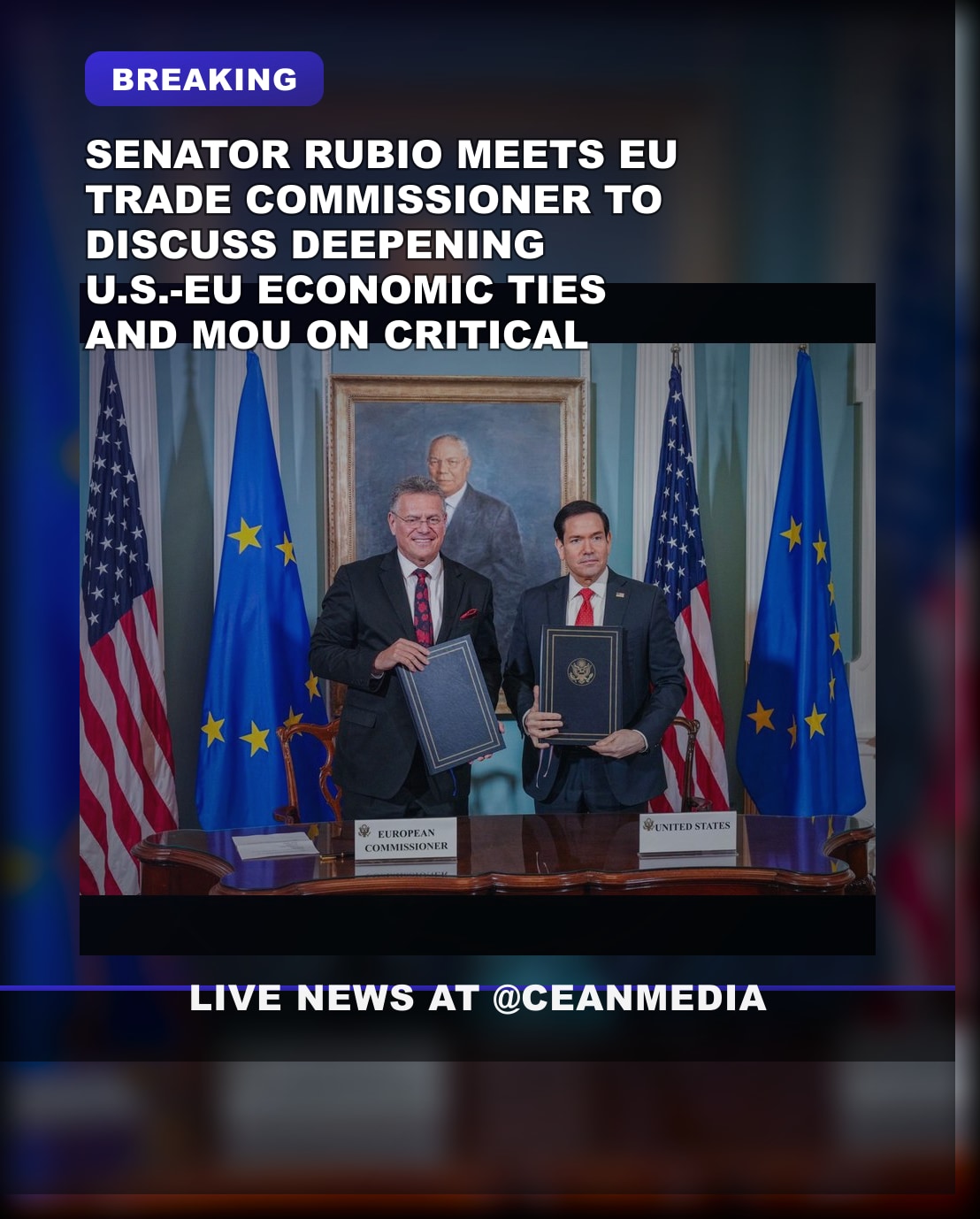
Summary: U.S. Senator Marco Rubio reported meeting EU Trade Commissioner Maroš Šefčovič to discuss deepening economic ties and signing a memorandum of understanding on critical minerals, emphasizing that the USA and EU share the world’s largest trade and investment relationship and that these actions will strengthen it.
What We Know
- Rubio wrote that he met with EU Trade Commissioner Maroš Šefčovič to discuss deepening U.S.-EU economic ties.
- The discussions included the possibility of signing an MOU on Critical Minerals.
- Rubio characterized the U.S.-EU trade and investment relationship as the world’s largest.
- Public emphasis from Rubio is on strengthening bilateral economic ties between the U.S. and Europe.
- Context in related reporting indicates U.S.-Europe ties are being framed as important for transatlantic cooperation amid broader tensions.
What’s Still Unclear
- Whether the talks have produced concrete commitments or timelines beyond the proposed MOU on Critical Minerals.
- Specific sectors or sectors beyond critical minerals that might be targeted under any formal agreement.
- Whether any formal negotiations or accords were publicly scheduled beyond the stated meeting and discussion.
- Exact language used by Rubio regarding the nature and depth of strengthened ties (beyond the general claim about the largest trade and investment relationship).
Context
General background: The United States and Europe maintain the world’s largest bilateral trade and investment relationship. U.S.-EU relations often include discussions on trade, investment, and strategic cooperation, with periodic moves to formalize collaboration on critical supply chains and policy coordination. Public messaging from U.S. officials in recent years has emphasized revitalizing transatlantic ties amid tensions and shifts in global economics and security dynamics.
Why It Matters
Strengthening U.S.-EU economic ties can influence trade policy, supply chain security (notably in critical minerals), and broader transatlantic cooperation on economic policy and geopolitical challenges. A formal MOU on Critical Minerals could affect industry planning, regulatory coordination, and strategic diversification of supply chains.
What to Watch Next
- Whether a formal MOU on Critical Minerals is announced or signed.
- Any follow-up meetings or negotiations between U.S. and EU officials or leaders focused on economic ties.
- Announcements related to regulatory alignment or joint initiatives in trade and investment areas.
- Reaction from industry groups and allied governments regarding any proposed framework or commitments.
FAQ
Q: What is the key takeaway from Rubio’s statement?
A: He signals ongoing efforts to deepen U.S.-EU economic ties and to pursue an MOU on Critical Minerals, highlighting the significance of the bilateral relationship.
Q: Does this imply a formal agreement is imminent?
A: Not confirmed in the available information; discussions about an MOU are mentioned, but no firm timetable or terms are provided.
Related coverage
- Trump review bank actions LA fires after meeting Bass
- Houston Leaders Reverse Course on Immigration Cooperation
- Cruz Urges Senate to Embrace Somaliland National Security
Source Transparency
- This article is based on a short preliminary brief and may not reflect the full details available in ongoing reporting.
- Source links are provided in the Sources section where available.
- A limited open-web check was used to clarify key details when possible; unclear items remain clearly marked.
Original brief: Rubio writes that he just met with the EU Trade Commissioner Maroš Šefčovič to discuss how to deepen U.S.-EU economic ties and sign an MOU on Critical Minerals
Sources
- Rubio says US and Europe 'belong together' despite tensions
- Rubio Says U.S. and Europe 'Belong Together' in Key Speech
- In Munich, Secretary Rubio Calls on Allies to Embrace Shared Heritage …
- Rubio calls for U.S. and Europe to “revitalize an old friendship” in …
- Rubio tries to ease tensions with Europe with message of unity : NPR