
Published 2026-05-07

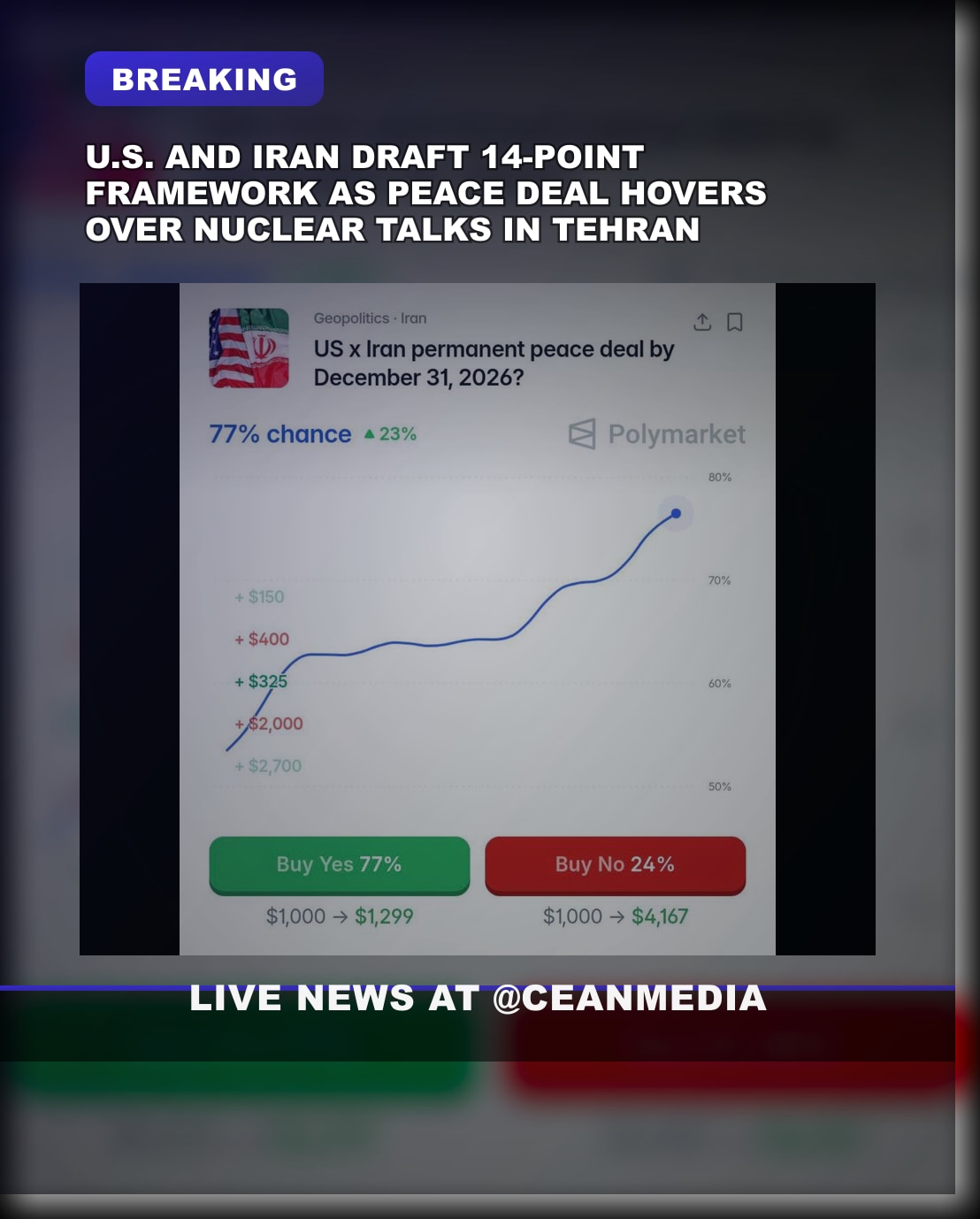
Summary: Reported drafting of a 14-point framework for a U.S.–Iran peace deal has coincided with a surge in market odds predicting a deal by year-end, though major sticking points remain over Tehran’s nuclear program and related sanctions.
What We Know
- The United States and Iran are reportedly drafting a 14-point framework intended to end the war, with discussions ongoing about a potential peace deal.
- Market indicators on Polymarket show (as reported) that the probability of a peace deal being signed before the end of the year has risen substantially.
- Key points of contention cited in reporting include Tehran’s nuclear weapons program and related demands, shaping the stalled nature of negotiations.
- Trump has reportedly reviewed or is reviewing Iran’s latest peace proposal, indicating high-level attention from U.S. leadership.
- Mediators have been referenced in reports as part of efforts to move the process forward, with Pakistan named in some contexts as a channel.
What’s Still Unclear
- Whether any proposed 14-point framework will be accepted by all parties or lead to a lasting agreement by year’s end.
- Exact terms of Iran’s 14-point proposal and how they align with U.S. sanctions relief or security arrangements in the region.
- Specifics on which mediators are actively involved beyond mentions of Pakistan, and the status of backchannel efforts.
- The reliability and predictive value of market odds (e.g., Polymarket) in forecasting a durable peace deal.
Context
In the broader regional context, discussions around a possible U.S.–Iran peace framework intersect with ongoing tensions over Iran’s nuclear program, sanctions, and regional security dynamics in the Middle East. Public reporting indicates efforts at high-level diplomacy and mediation, though details and outcomes remain uncertain.
Why It Matters
Any progress toward a formal peace framework could shape security calculations across the Middle East, influence sanctions policies, and affect regional actors’ strategic calculations. Observers caution that real-world verification and implementation will determine whether a durable peace is possible.
What to Watch Next
- Developments on whether the 14-point framework is formally adopted or rejected by the involved parties.
- Updates on Trump’s stance or involvement as it relates to the latest proposal.
- Announcements from mediators or third-party channels about progress or backchannel talks.
- Any new public statements clarifying sanctions relief terms or nuclear-related negotiations.
FAQ
Q: What is driving the talk of a 14-point framework?
A: Reports indicate it is a proposed framework to end the war and guide negotiations between the U.S. and Iran, with ongoing reviews by U.S. leadership.
Q: Are there confirmed dates for a peace deal?
A: No specific date is confirmed; reporting references a potential end-of-year target, but outcomes remain uncertain.
Related coverage
- CMA CGM San Antonio Hit by Projectiles in Strait of Hormuz:
- US Officials Reveal Military Role in Hormuz Transit:
- Pezeshkian requests halt attacks as MP urges mediation over
Source Transparency
- This article is based on a short preliminary brief and may not reflect the full details available in ongoing reporting.
- Source links are provided in the Sources section where available.
- A limited open-web check was used to clarify key details when possible; unclear items remain clearly marked.
Original brief: After reports that the U.S. and Iran are drafting a 14-point framework for a peace deal, the likelihood of a such a deal being signed before the end of this year has skyrocketed to 77% on @Polymarket
Sources
- What's Iran's 14-point proposal to end the war? And … – Al Jazeera
- Ceasefire hangs in the balance as Iran sends peace proposal to …
- US-Iran Talks Deadlocked: Will Trump Accept Tehran's 14-Point Peace …
- Iran offers new peace proposal to US but Trump 'not satisfied'
- Iran Predictions & Real-Time Odds | Polymarket