
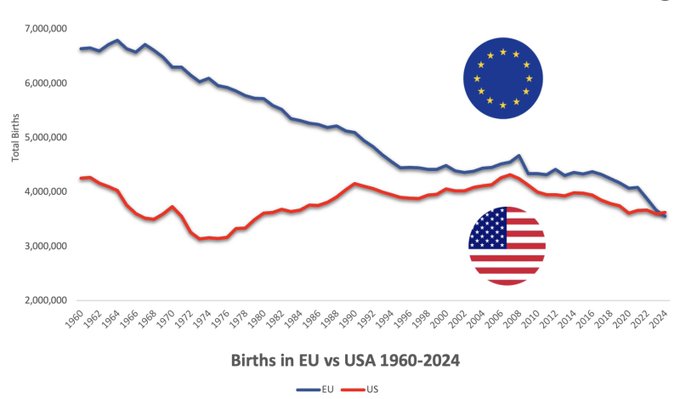
According to recent data, the United States registered a higher number of births last year than the European Union, despite having a smaller population. The U.S. population stood at approximately 340 million, while the EU’s population was around 450 million. This resulted in the U.S. experiencing a higher birth count relative to its population size.
Experts suggest that differing fertility rates, cultural factors, and socioeconomic conditions may contribute to this discrepancy. The higher birth numbers in the U.S. could reflect varying family planning trends and demographic patterns compared to European countries.
The data highlights ongoing demographic shifts impacting both regions. While the EU has generally experienced flatter or declining birth rates in recent years, the U.S. appears to maintain a comparatively higher fertility rate, influencing population growth dynamics in both areas.
Demographers and policymakers often analyze such trends to inform social and economic planning, including healthcare, education, and long-term population strategies. The recent figures underscore the importance of understanding regional fertility patterns amid changing global demographic landscapes.