
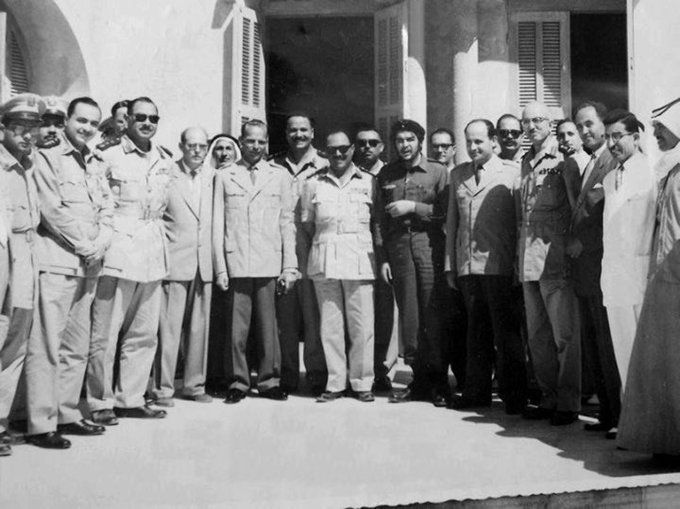
During the period of Egyptian control over Gaza from 1948 to 1967, there was little evidence of a significant international movement advocating for Palestinian independence specifically within Gaza. Instead, the regional focus was largely on broader Arab unity, with efforts directed toward collective Arab solidarity rather than the establishment of a separate Palestinian state in Gaza.
Throughout this period, the political landscape did not emphasize Gaza as a standalone entity seeking independence. Instead, the region’s political discourse centered around Arab integration and pan-Arab ideals, with Gaza often viewed as part of the larger Arab cause rather than a distinct national entity.
A notable moment highlighting Gaza’s international connections occurred in 1959, when Che Guevara, the prominent Marxist revolutionary, visited Egyptian-controlled Gaza. His visit underscored the geopolitical and ideological ties that Gaza had with broader international communist and revolutionary movements during the Cold War era. Guevara’s visit symbolized the ideological affinity and interest that some international actors had with the region, although it did not translate into a significant push for Palestinian sovereignty at the time.