
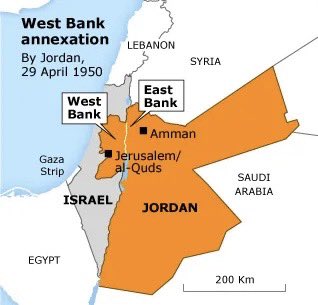
Following the establishment of Israel in 1948, the region experienced significant territorial shifts. Egypt occupied the Gaza Strip, while Jordan formally annexed the West Bank, including East Jerusalem. These developments marked a period of Arab control over the territories, rather than a unified Palestinian state.
Throughout the subsequent years, the areas remained under the administration of their respective Arab governments, with no independent Palestinian state established. The situation persisted until the Six-Day War in 1967, when Israel captured both Gaza and the West Bank amidst broader conflict in the region.
This period of Arab control shaped the political landscape of the Palestinian territories and influenced later peace negotiations and regional dynamics. The transition of these territories in 1967 marked a significant turning point, contributing to ongoing disputes and efforts toward Palestinian self-determination.
Today, the legacy of this history remains central to the Israeli-Palestinian conflict, with the borders and governance of Gaza and the West Bank continuing to be key points of contention.