
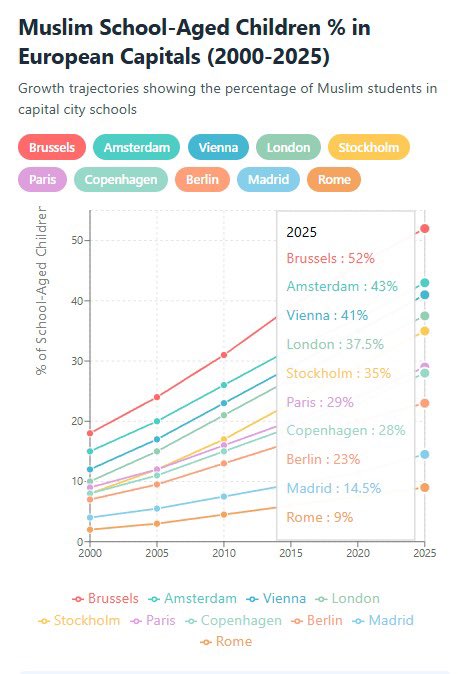
A recent analysis suggests that Europe faces significant demographic shifts that could lead to a majority Muslim population in many countries by the end of this century. The projection is based on current migration patterns, birth rates, and demographic trends across the continent. Experts warn that without deliberate policy changes, these shifts may have profound social, cultural, and political implications.
Demographers point out that countries with higher recent immigration levels and higher birth rates among Muslim populations are likely to see these communities grow faster than their non-Muslim counterparts. Projections indicate that if current trends persist, large areas of Europe could experience a demographic majority of Muslim residents by the end of the 21st century. However, analysts also stress the uncertainty inherent in long-term forecasts and emphasize that these projections depend heavily on future immigration policies, integration efforts, and demographic choices.
The prospects have sparked discussions among policymakers, community leaders, and advocacy groups about immigration, integration, and social cohesion. Some argue that addressing these demographic trends through policy could influence future societal dynamics, while others stress the importance of ensuring inclusion and stability regardless of changing populations. Regardless of perspective, experts agree that understanding and responding to these demographic changes will be a significant challenge for Europe’s social fabric moving forward.