
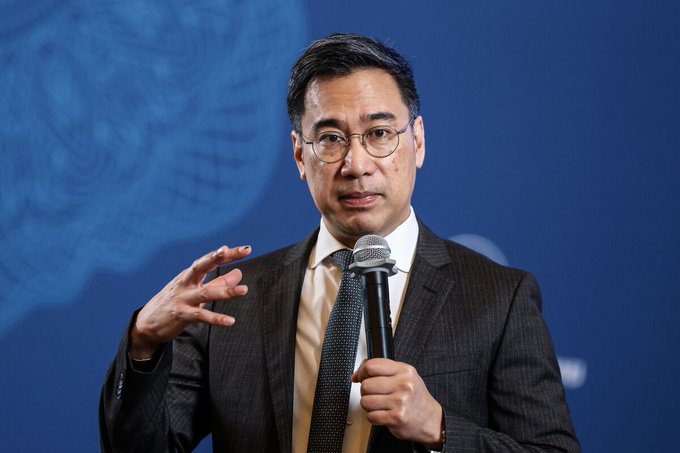
The Bank of Thailand’s outgoing Governor, Sethaput Suthiwartnarueput, has called for a shift in how inflation is targeted and managed by monetary authorities. During his tenure, Suthiwartnarueput emphasized the importance of adopting a more flexible approach to inflation control rather than adhering strictly to specific inflation rate targets.
In his remarks, he suggested that a rigid focus on fixed inflation goals could limit the central bank’s ability to respond effectively to economic shocks and changing economic conditions. Suthiwartnarueput advocated for a broader framework that allows for greater policy discretion, with the aim of supporting overall economic stability and growth.
Economists and analysts have noted that the proposal aligns with a growing trend among central banks worldwide to prioritize economic stability and employment alongside inflation management. While the specifics of the proposed shift remain to be detailed, Suthiwartnarueput’s comments have sparked discussions about the future monetary policy framework in Thailand.
As his term concludes, the Bank of Thailand is expected to consider these perspectives, potentially leading to a reevaluation of its inflation targeting strategy. The central bank’s decision will be closely watched by market participants and policymakers eager to understand how Thailand plans to navigate its economic challenges in the coming years.