
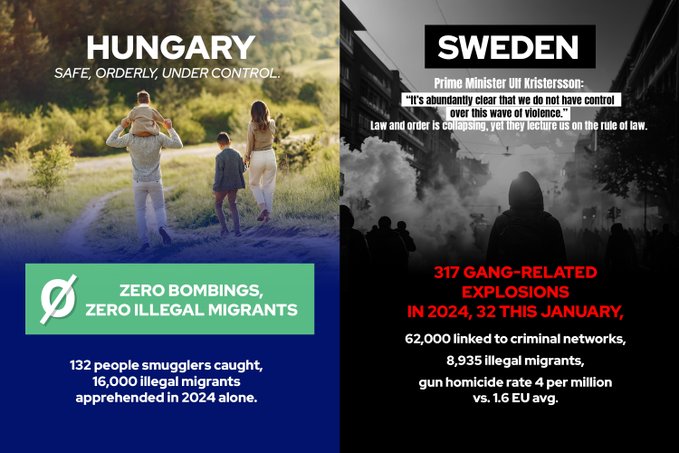
Hungarian Prime Minister Viktor Orban highlighted a significant difference in safety statistics between Hungary and Sweden, noting that Hungary experienced no gang-related bomb explosions in the past year. In contrast, Sweden reported a total of 317 such incidents during the same period, according to recent data.
Orban’s remarks emphasized Hungary’s relative stability and improved security situation, contrasting it with the challenges faced by Sweden in addressing organized crime and related violence. The Hungarian government has aimed to promote its safety record as part of its broader political messaging, while Swedish authorities continue to grapple with concerns over violence linked to criminal gangs.
Experts suggest that these figures reflect differing approaches to law enforcement, social policies, and crime prevention strategies in the two countries. While Hungary points to its low incident count as a success, analysts note that regional security dynamics and reporting practices can influence such statistics.
The comparison has drawn attention to broader issues of public safety and crime control within Europe, highlighting contrasting experiences in maintaining security amid rising concerns over violence and organized crime.