
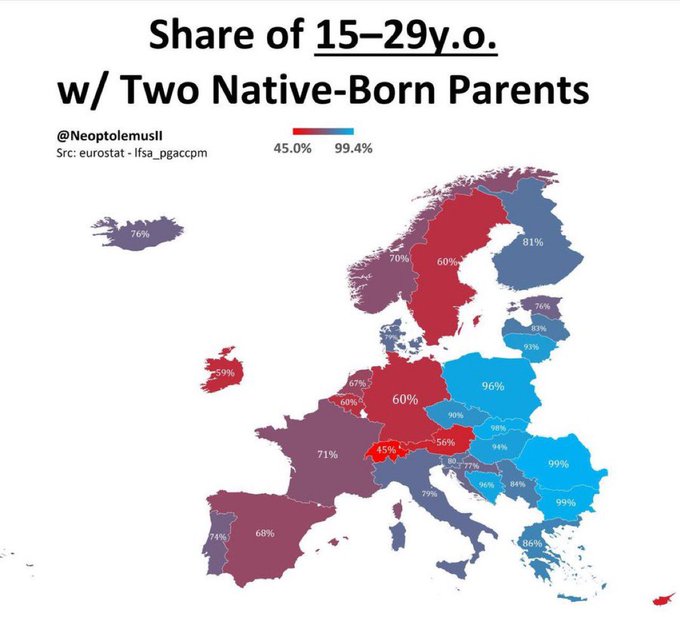
A recent survey has revealed varying levels of familiarity or engagement with multi-generational family structures across several European countries. According to the data, 56% of respondents in Austria reported positive interactions or awareness regarding extended family environments, whereas in Ireland, the figure increased slightly to 59%. Scandinavian country Sweden has the highest percentage among the surveyed nations, with 60%, alongside Germany and Belgium, where the same percentage was recorded.
The survey results primarily focus on the current responses concerning three-generation family dynamics. However, there is speculation about how these figures might change if the question shifted to include four generations of grandparents. Experts suggest that extending the scope to include four grandparents could potentially alter the percentages, either increasing or decreasing the levels of reported familiarity, depending on cultural norms and family structures in each country.
While the current data offers insight into existing perceptions, it remains unclear how attitudes might shift with the expanded question. Family dynamics and multigenerational living arrangements are complex and vary widely across Europe. Further research could provide a broader understanding of how families view and engage with extended kinship networks beyond the three-generation model.