
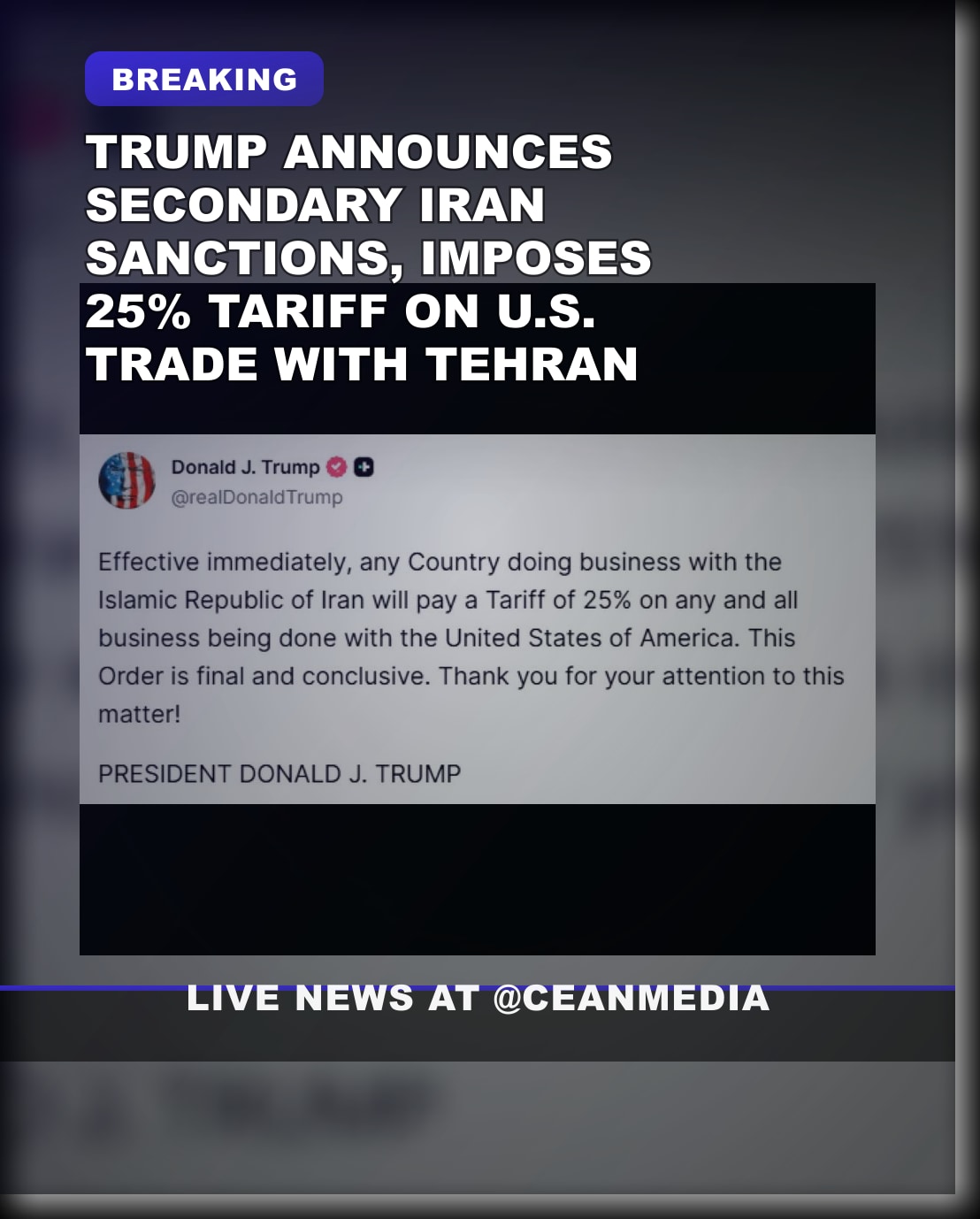
Former President Donald Trump has announced the implementation of secondary sanctions targeting Iran. Under the new policy, any country that conducts business with Iran will be subject to a 25% tariff on all transactions involving the United States. The move is designed to exert further economic pressure on Tehran amid ongoing concerns over its nuclear program and regional activities.
The sanctions represent a significant escalation in the U.S. approach toward Iran, aiming to curb its economic and diplomatic activities. By targeting third-party countries and companies, the policy seeks to isolate Iran financially and reduce its ability to engage in international commerce. The U.S. government has indicated that these measures are part of broader efforts to discourage Tehran from advancing its nuclear and military programs.
Reaction to the announcement has been mixed. U.S. officials have described the sanctions as a necessary step to increase pressure on Iran, while some international partners have expressed concerns about the potential for economic disruption and the impact on global markets. Iran has yet to respond publicly to the new measures, but experts suggest that Tehran will likely seek ways to mitigate the sanctions’ effects on its economy.
The sanctions are expected to further weaken Iran’s economy, which has already been strained by previous U.S. policies and international sanctions. Analysts warn that the measures could lead to increased tensions between Iran and the United States, with potential implications for regional stability and international diplomacy.