
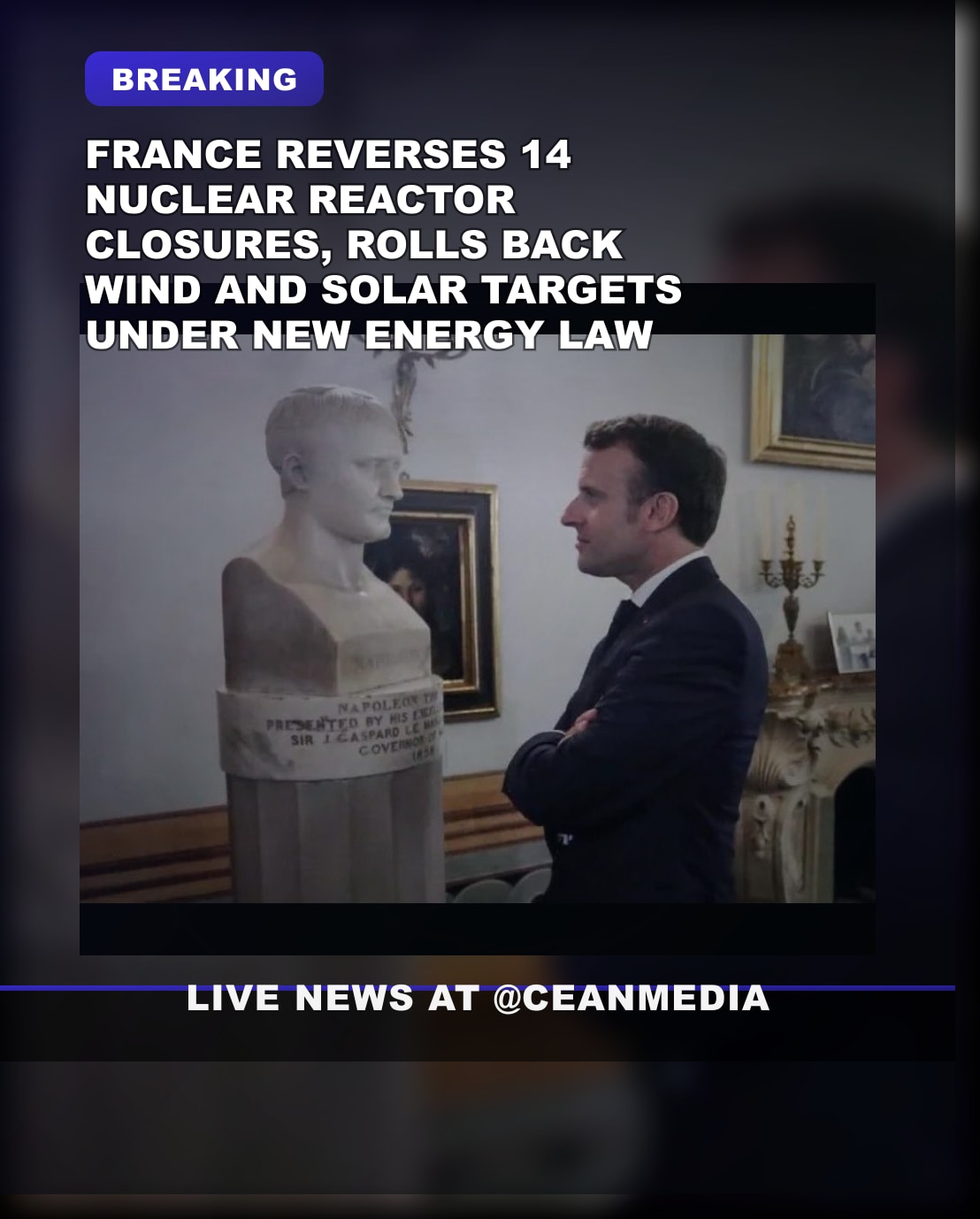
Published 2026-02-16

Summary: France reverses a prior plan to shut 14 nuclear reactors and introduces an energy law that reduces wind and solar targets while expanding nuclear power, according to multiple sources. The policy shift appears to reaffirm a focus on nuclear output across its fleet of reactors, with reports of six new nuclear plants in the roadmap.
What We Know
- France has decided to abolish its previous decision to shutter 14 nuclear reactors as part of a new energy law.
- The new law slashes wind and solar power targets.
- The policy reverses a mandate regarding nuclear plant closures, aligning with increased emphasis on nuclear power.
- France’s energy strategy reportedly counts on higher nuclear power output from its 57 reactors.
- France publishes an energy roadmap that confirms plans for six new nuclear power plants.
What’s Still Unclear
- Exact timing and commissioning details for the six new nuclear plants are not specified in the available information.
- Whether EDF is legally required to shutter any reactors under the new framework is not consistently confirmed across sources.
- Clarification on how the revised targets affect overall climate and renewable energy goals in the medium term is not provided.
- The precise scope of the wind and solar target reductions (percentages or absolute figures) is not detailed here.
Context
France has long balanced a diversified energy mix with a strong emphasis on nuclear power. Debates over the pace and extent of renewable deployment versus nuclear expansion have been prominent in recent years, with policy shifts tied to energy security, economic considerations, and climate objectives. The exact policy instruments, timelines, and impact on energy prices require further official documentation to assess fully.
Why It Matters
The move could affect France’s electricity market dynamics, energy security planning, and its trajectory for reducing greenhouse gas emissions. A shift toward greater nuclear reliance paired with reduced renewables targets may influence investment signals for both nuclear and renewable sectors, as well as consumer energy costs and industrial competitiveness.
What to Watch Next
- Official minutes or texts clarifying the scope and timelines of the six proposed new nuclear plants.
- Details on whether and how EDF is affected by the reversal of the closure mandate.
- Updated projections for electricity mix, emissions, and energy prices under the new law.
- Responses from industry, environmental groups, and political actors to the policy reversal.
FAQ
Q: What does the policy reversal involve for existing reactors?
A: Available information indicates that the law reverses a mandate to shutter reactors, but specifics about whether more reactors are reopened or simply kept running are not fully detailed.
Q: How are renewable energy targets affected?
A: The law slashes wind and solar power targets, though exact figures are not provided in the available sources.
Related coverage
- LINK Technical View and ETF Flows Context for 2026-02-15 —
- BTC technical analysis: Daily Market Setup and ETF Flows
- AI disruption concerns on earnings calls rise in latest
Source Transparency
- This article is based on a short preliminary brief and may not reflect the full details available in ongoing reporting.
- Source links are provided in the Sources section where available.
- A limited open-web check was used to clarify key details when possible; unclear items remain clearly marked.
Original brief: France has decided abolish its previous decision of closing 14 nuclear reactors.
The new energy law also slashes the country’s wind and solar power targets.
The new law reverses a previous legal mandate to shut 14 reactors.
That was a 2017 campaign promise of President…
Sources
- France slashes renewable energy targets, expands nuclear power with new …
- France bets on nuclear as climate policy fractures across Europe
- France Publishes Energy Roadmap That Confirms Plans For Six New Nuclear …
- France Framework For Nuclear Energy Growth – National Law Review
- France's Nuclear Gamble: Status, Challenges and the Road Ahead