
Published 2026-02-22

Summary: The discount of Russia’s Urals crude to Brent has deepened, with reports indicating a record-high gap, amid broader weakness in Urals prices and implications for the Russian Federal Treasury.
What We Know
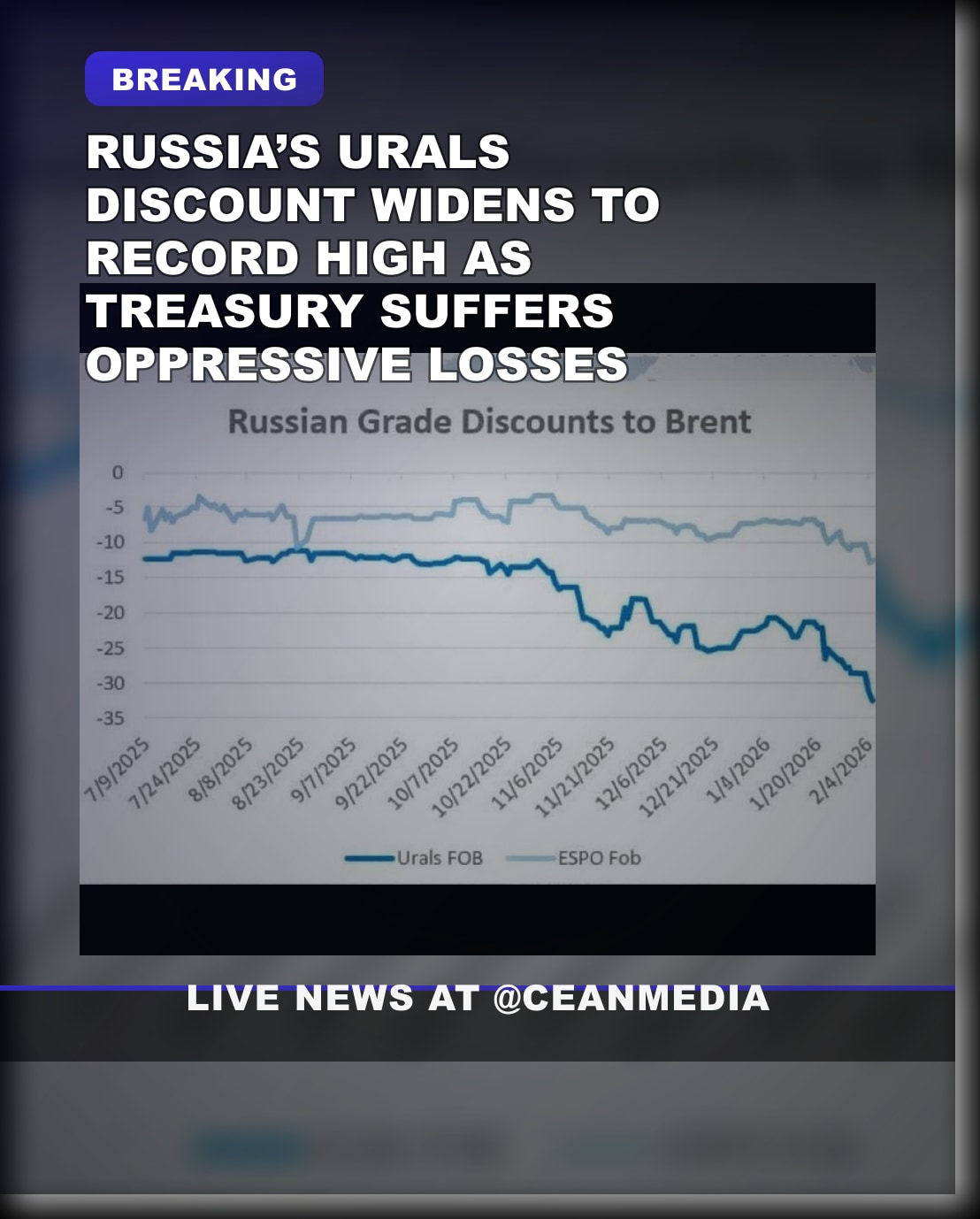
- The Urals oil discount to Brent has widened from around -$12 earlier to a record-high level according to recent reports.
- Multiple sources describe the discount as approaching or reaching the widest gap since mid-2023, with some noting a potential comparison to a record set in early 2023 when Urals briefly fell about $40 below Brent.
- Reports indicate the situation coincides with falling Urals prices and reduced demand in global markets.
- Some outlets cite data suggesting the discount has nearly doubled within a recent period, reflecting intensified price differentials.
- The trend is framed as a challenge for the Russian Federal Treasury, implying fiscal pressure from lower Urals revenues.
What’s Still Unclear
- Exact current dollar amount of the Urals discount varies across sources; a single confirmed figure is not consistently stated.
- Specific dates for when the discount measurements were taken are not uniform across reports.
- Whether the discount level will stabilize or continue to worsen in the near term remains unconfirmed from the available information.
- Details on the methodology used by different sources to calculate the discount are not provided in the material available here.
Context
Urals crude is Russia’s flagship export blend, typically priced as a differential to Brent. Discounts to Brent can reflect shifts in demand, sanctions dynamics, and broader global oil market conditions. The broader economic impact often centers on government revenue and budgeting, particularly when export earnings are pressured by price discounts.
Why It Matters
Widening discounts for Urals to Brent signal tighter export earnings for Russia and potential fiscal pressure on the state budget. Persistent discounts can influence planning for energy policy, revenue forecasts, and macroeconomic considerations in Russia and partner markets.
What to Watch Next
- Monitor any new price data or official statements that confirm the current Urals-to-Brent discount level.
- Watch for analyses on whether the discount trend stabilizes or accelerates, and potential impacts on Russian fiscal policy.
- Observe broader market developments that affect demand for Urals and its price relationship to Brent.
FAQ
Q: What is the current discount of Urals to Brent?
A: The available information indicates the discount has widened and is described as reaching a record-high or widest gap since mid-2023, but an exact consistent figure is not confirmed across all sources.
Q: Why is this discount important?
A: It relates to export revenue for Russia and can affect the federal budget and economic policy.
Related coverage
- Trump endorsement withdrawal impact: Jeff Hurd votes
- SOL technical analysis: ETF flows reshape 2026 outlook
- Honeywell JM Catalyst Talks Near Johnson Matthey Pivot
Source Transparency
- This article is based on a short preliminary brief and may not reflect the full details available in ongoing reporting.
- Source links are provided in the Sources section where available.
- A limited open-web check was used to clarify key details when possible; unclear items remain clearly marked.
Original brief: The discount on Russia’s Urals oil was kept at a steady level of around -$12 compared to Brent up until November last year.
Since then, it has been in free fall and has now reached a record-high -$33
The Federal Treasury of the Russian Federation is suffering like never before…
Sources
- Urals Crude Oil Discount Hits Record Low Amidst Falling Prices …
- Russia's Urals Oil Crashes to 2.5-Year Low as Global Buyers Pull Back …
- Russia's flagship oil price drops as buyers retreat ahead of US … – MSN
- Urals Crude Oil Discount Hits Record Low Amidst Falling Prices …
- Russia's Urals oil price discount widens to 23% in November, central …