
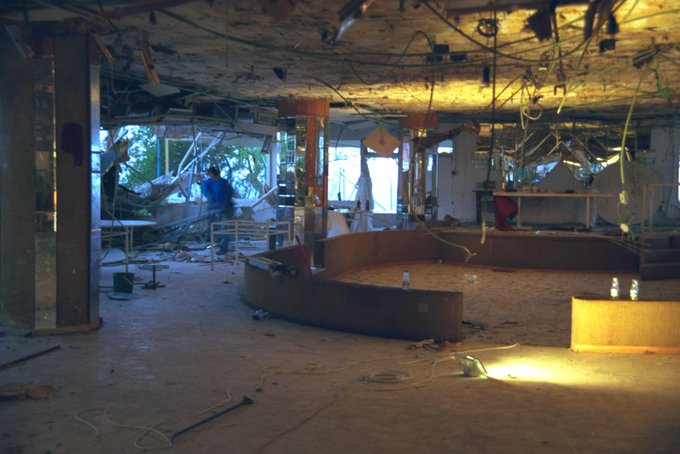
On March 27, 2002, the Passover Massacre shocked Israel and the international community when a suicide bomber affiliated with Hamas targeted the Park Hotel in Netanya. The attack, which coincided with Passover celebrations, resulted in the deaths of 30 civilians and injured dozens more. It was one of the deadliest incidents during the Second Intifada, highlighting the escalating violence between Palestinians and Israelis.
In response to the attack, Israel launched Operation Defensive Shield in March and April 2002, a large-scale military operation aimed at restoring security in the West Bank. Israeli forces reoccupied several Palestinian cities, conducting extensive raids and arrests targeting militants. The operation marked a significant escalation in Israel’s West Bank strategy and intensified calls within the international community for a renewed peace process.
The Palestinian Authority, led by President Yasser Arafat, faced criticism for its perceived failure to prevent such attacks. Many accused Arafat’s government of not doing enough to curb militant activities, leading to increased tension between Israel and the PA. The violence and subsequent military actions deepened the divide, complicating efforts for peace in the region.
As the conflict continued, the international community called for renewed negotiations and a de-escalation of violence, but the cycle of attacks and military responses persisted. The Passover Massacre and Operation Defensive Shield remain pivotal moments in the Israeli-Palestinian conflict, exemplifying its ongoing complexity and violence.