
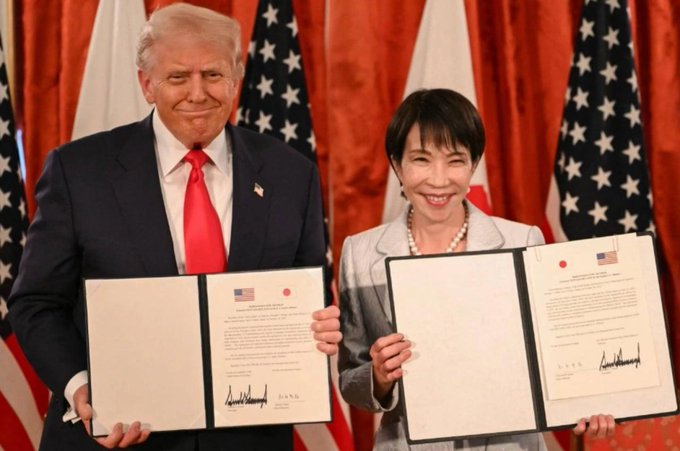
Japanese Prime Minister Sanae Takaichi and former U.S. President Donald Trump recently convened for their first summit in Tokyo, marking a notable diplomatic engagement. During the meeting, the two leaders signed an agreement aimed at reducing dependence on Chinese rare earth metals, a strategic resource critical for advanced technology and manufacturing industries. The deal emphasizes diversification of supply chains and cooperation on securing alternative sources of these essential materials.
Sanae Takaichi, the first woman to serve as Japan’s Prime Minister, expressed optimism about strengthening bilateral ties and fostering a “new golden age” of cooperation between Japan and the United States. The leaders discussed broader economic and security issues, reaffirming their commitment to strategic partnership amid evolving regional and global challenges.
The agreement on rare earth metals reflects ongoing efforts by Japan and other allied nations to reduce reliance on China, which currently dominates the global supply of these minerals. The summit underscores the importance of supply chain resilience in technology sectors and highlights the growing push for greater resource independence among Pacific nations.
While details of the specific measures remain undisclosed, the partnership is viewed as a step toward greater economic security and technological competitiveness. As Japan navigates its role amidst regional tensions, collaborations like this signal an emphasis on diversification and strategic autonomy in critical industries.