
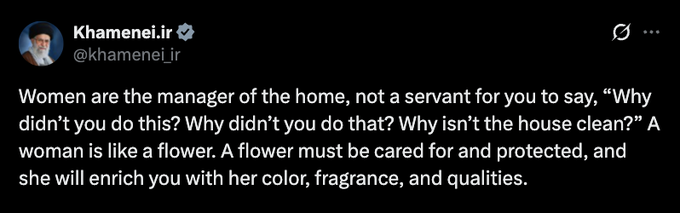
Iran’s Supreme Leader Ayatollah Ali Khamenei recently lauded women as “flowers” to be cherished within the home, emphasizing their role in family and society. His remarks aim to highlight the importance of women in Iranian culture, often portraying them as central to family life and moral values. Such statements are part of ongoing rhetoric that emphasizes traditional gender roles in the country.
Despite these remarks, Iran remains one of the world’s most restrictive countries regarding women’s rights. Women are subject to strict dress codes requiring them to wear modest clothing, including the mandatory hijab in public. Violations, such as showing hair in public or attending certain events like sports matches, can result in legal repercussions, including fines and imprisonment. These measures reflect the government’s ongoing efforts to enforce conservative cultural norms.
International human rights organizations continue to spotlight Iran’s policies as highly restrictive, citing cases of women facing harassment or punishment for seeking greater freedom and equality. Movements advocating for women’s rights face significant challenges, with authorities often cracking down on protests and activism. Despite the restrictions, some Iranian women are actively pushing for reforms and greater personal freedoms within the current societal framework.
The tension between official rhetoric celebrating women and the realities of repression highlights the complex gender landscape in Iran. While leaders publicly promote traditional values, many women in the country continue to advocate for greater rights and liberties, often at great personal risk. The situation underscores the ongoing struggle for gender equality amidst restrictive societal and legal conditions.